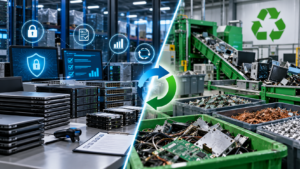
IT asset disposition (ITAD) and electronics recycling are closely related, but they are not the same service. Electronics recycling focuses primarily on recovering materials from electronic equipment that has reached the end of its useful life. ITAD is a broader business process for securely, responsibly, and economically managing retired IT assets from removal through final disposition.
For a business replacing 200 laptops, decommissioning servers, closing an office, or refreshing networking equipment, the distinction matters. Some devices may need to be recycled, while others can potentially be sanitized, tested, reused, resold, donated, or redeployed.
What Is IT Asset Disposition?
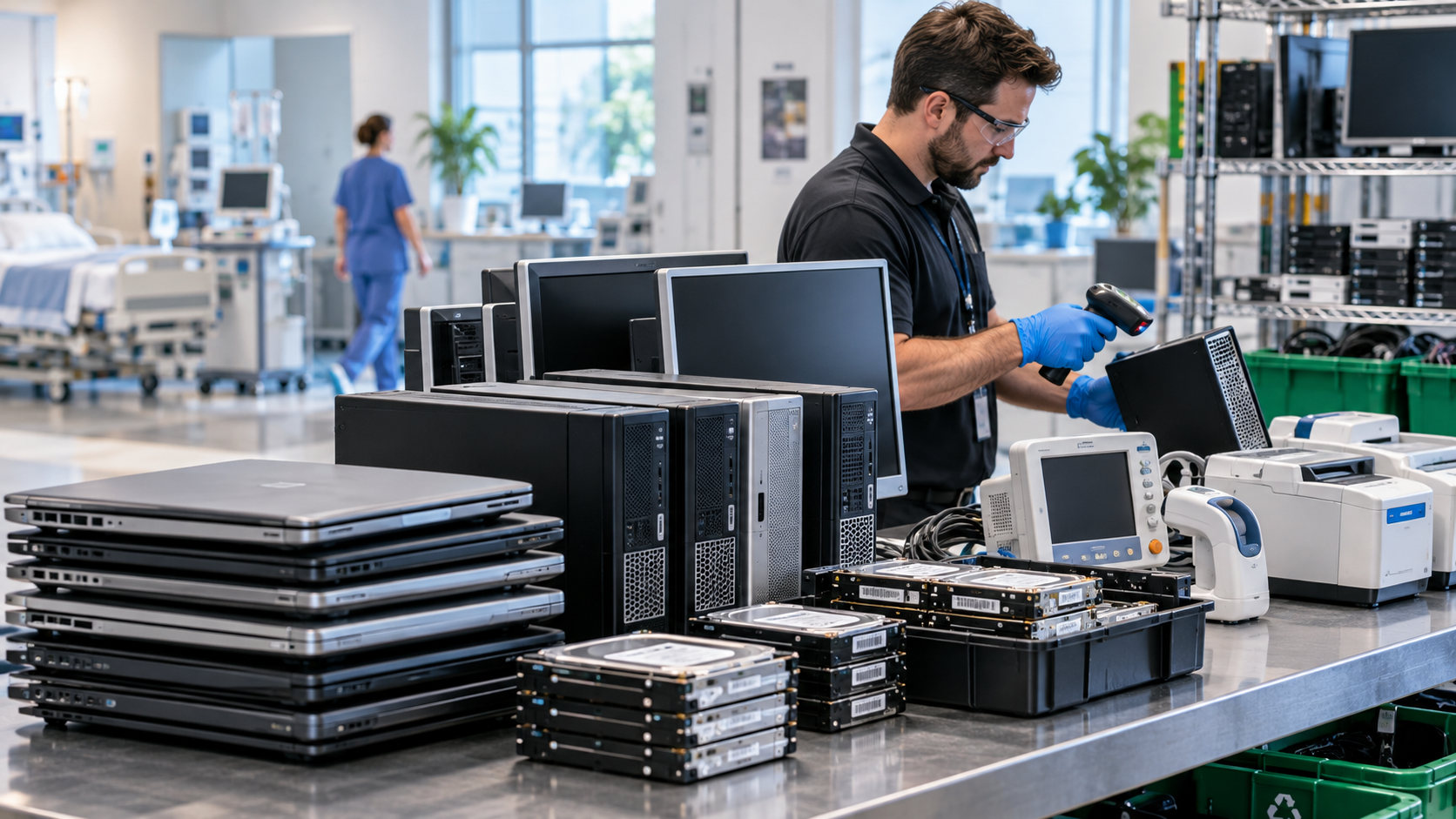
IT asset disposition is the structured process organizations use when computers, servers, storage devices, networking equipment, mobile devices, and other technology leave active service.
A well-designed ITAD project can include:
Asset inventory and serial-number tracking
Removal and pickup coordination
Secure chain of custody
Data sanitization or physical media destruction
Testing and equipment grading
Redeployment or reuse
Remarketing and value recovery
Electronics recycling for assets that cannot reasonably be reused
Documentation and reporting
That broader scope is what separates ITAD from simply sending obsolete equipment for recycling.
Data security is especially important when retired equipment contains HDDs, SSDs, flash storage, or other media. NIST defines media sanitization as making access to target data infeasible for a given level of effort. Its current guidance, NIST SP 800-88 Rev. 2, published in September 2025, places greater emphasis on establishing an organization-wide media sanitization program and selecting appropriate controls based on information sensitivity.
What Is Electronics Recycling?
Electronics recycling addresses equipment that is no longer suitable for continued use and needs to enter a responsible materials-recovery process.
Depending on the equipment and processing method, recyclers may separate or recover metals, plastics, circuit boards, batteries, cables, and other components so appropriate materials can move into downstream recycling or recovery channels.
The U.S. Environmental Protection Agency recognizes R2 and e-Stewards as the two third-party certification standards for electronics recyclers in the United States. The EPA notes that certified electronics recyclers may also provide services such as data security and asset management, which illustrates why recycling and ITAD frequently overlap.
Electronics recycling can therefore be one destination within an ITAD program—but it is not necessarily the destination for every retired device.
ITAD vs. Electronics Recycling at a Glance
Consideration
ITAD
Electronics Recycling
Primary objective
Manage retired IT assets through secure final disposition
Process electronics for responsible material recovery
Data-bearing devices
Data sanitization/destruction is often a core requirement
Data handling may be offered but should be verified
Asset inventory
Often detailed by serial number or asset ID
May be less granular depending on service
Reuse
Frequently evaluated
Possible, but recycling focuses on end-of-life processing
Resale/value recovery
May be part of the program
Usually not the primary purpose
Chain of custody
Often important for business IT
Depends on provider and service requirements
Reporting
May include inventory, disposition and sanitization records
May include recycling or processing documentation
The right approach frequently combines both.
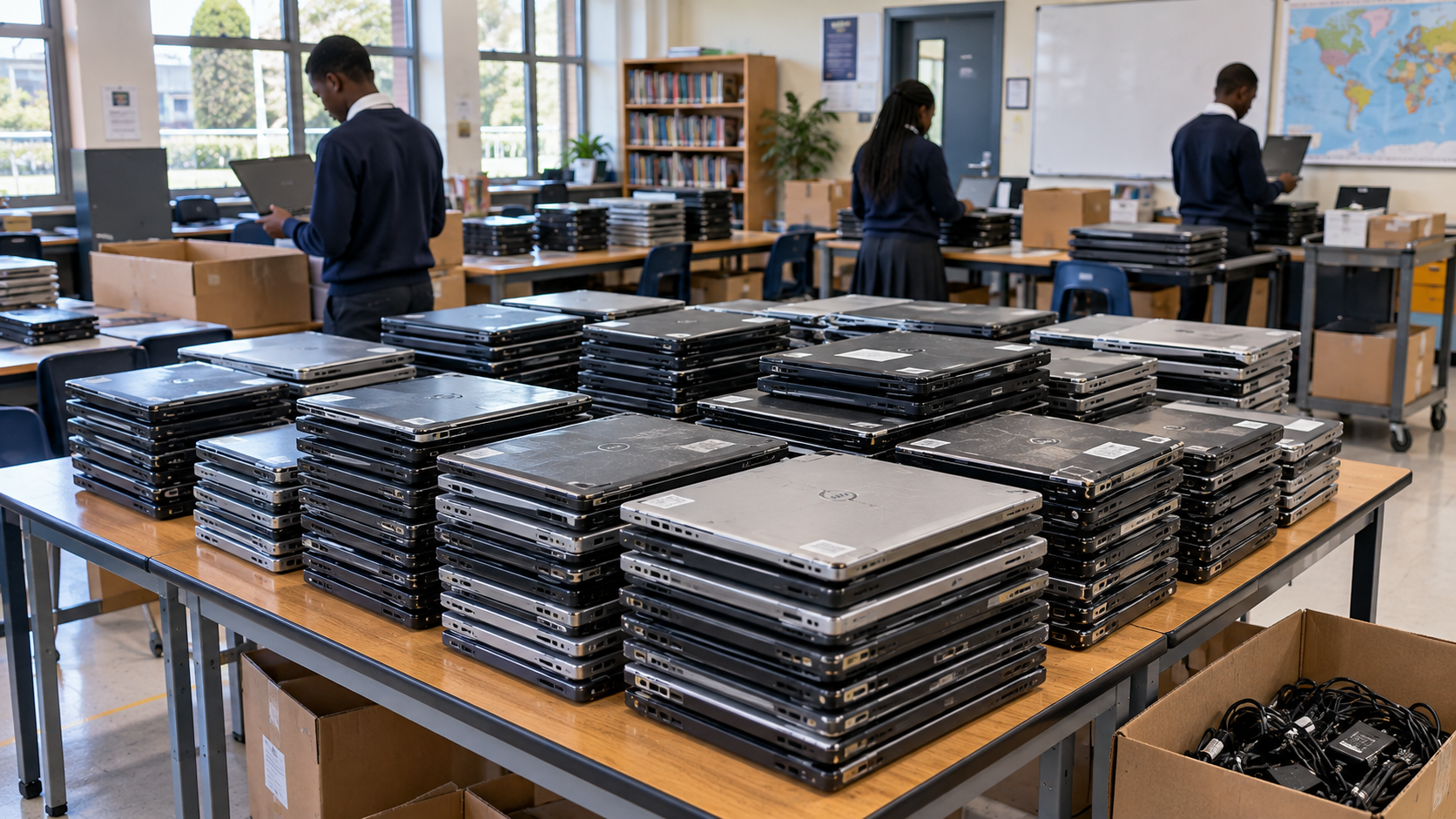
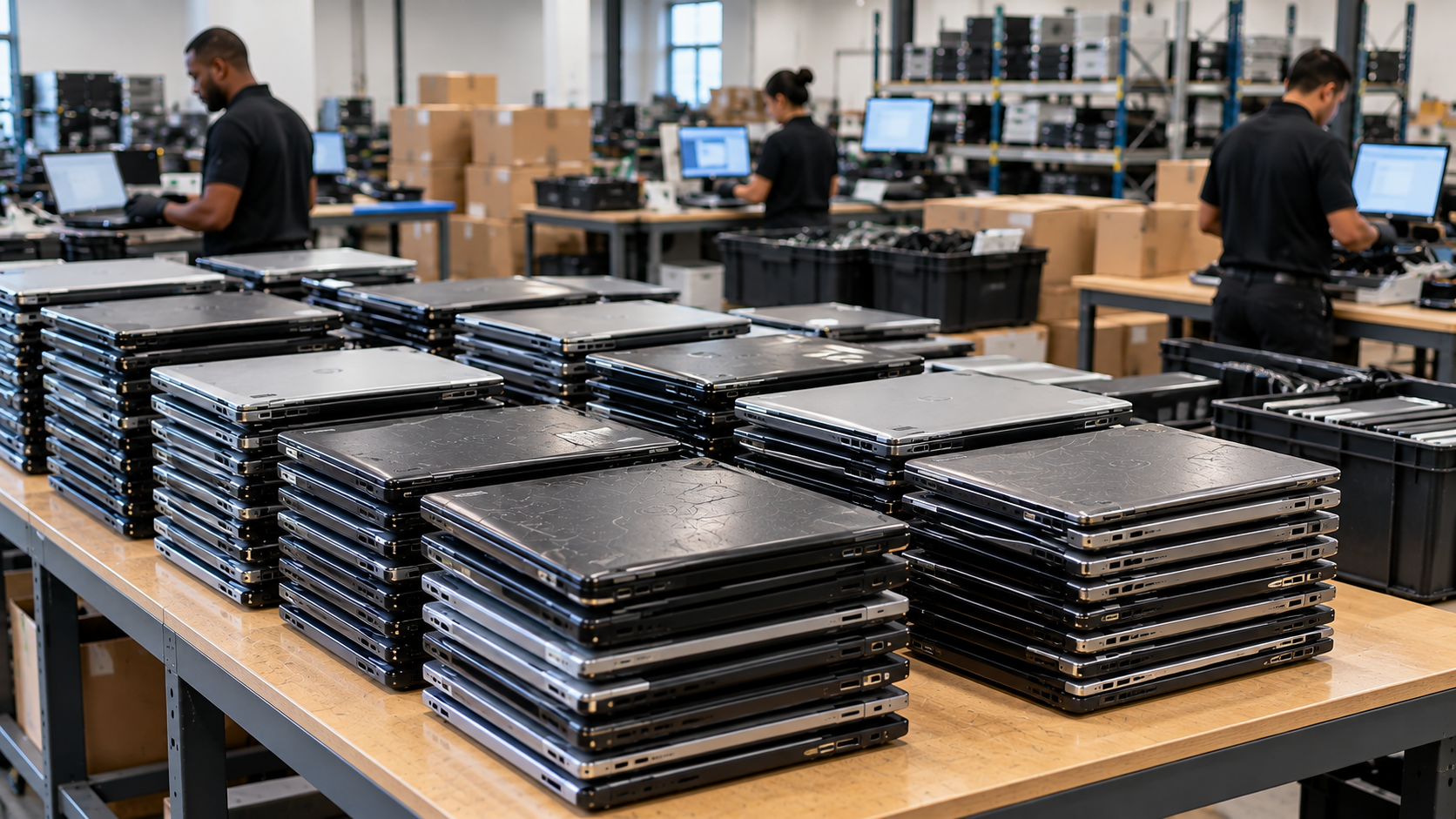
For example, a company refreshing 500 laptops may have 350 functional machines with residual market value, 100 machines suitable for parts or refurbishment, and 50 damaged units that should move directly to recycling. Treating all 500 purely as scrap could unnecessarily eliminate reuse and value-recovery opportunities.
Data Security Should Be Decided Before Recycling
A common mistake is assuming that recycling a computer automatically solves the data-security problem.
Organizations should determine how data-bearing devices will be controlled and sanitized before equipment leaves their custody. The appropriate method depends on the media, sensitivity of the information, contractual requirements, organizational policies, and applicable regulations.
NIST SP 800-88 Rev. 2 provides current federal guidance for creating a media sanitization program. Meanwhile, R2v3 includes data-security requirements and specialized requirements for facilities performing enhanced data-sanitization processes. SERI also requires controlled handling when sanitization is performed by qualified downstream vendors.
Organizations that need independently audited secure-destruction controls can also evaluate providers holding i-SIGMA NAID AAA Certification. The certification covers secure information-destruction operations and requires initial and continuing audits, including unannounced audits.
What Should You Ask an ITAD or Recycling Provider?
Before handing over business technology, ask practical questions about what will happen to it after collection.
Find out whether the provider can produce a detailed asset inventory, how equipment is protected during transportation, how data-bearing devices are identified, what sanitization or destruction methods are used, and what documentation you receive afterward.
Also ask where unusable equipment ultimately goes and whether relevant processing facilities hold certifications such as R2 or e-Stewards.
R2v3 addresses the downstream recycling chain, including requirements for qualifying and managing downstream vendors. e-Stewards likewise includes downstream due diligence, data-security requirements, and environmental-management controls.
The important point is not simply whether a vendor says it “recycles electronics.” Your organization should understand the entire disposition process.
When Does a Business Need ITAD Instead of Basic Recycling?
A structured ITAD solution is particularly useful when your project involves substantial equipment volumes, confidential data, detailed inventory requirements, multiple locations, reusable assets, certificates or reporting requirements, or coordinated pickup and logistics.
Straight electronics recycling may be sufficient for smaller quantities of obsolete, non-data-bearing equipment with little or no reuse value.
Many business projects fall somewhere between those two situations. A qualified provider can help separate reusable assets from equipment destined for recycling while applying appropriate controls to data-bearing devices.
FAQ
Is ITAD the same as e-waste recycling?
No. Electronics recycling can be part of an ITAD program, but ITAD can also involve inventory management, logistics, data sanitization, testing, reuse, resale, reporting, and other disposition activities.
Does every retired computer need to be physically destroyed?
No. Depending on the organization’s requirements and the media involved, properly validated sanitization may allow equipment to be safely reused. Organizations should follow an appropriate media-sanitization policy rather than automatically destroying functional equipment.
Can ITAD help recover value from old equipment?
Potentially. Functional equipment may retain resale or reuse value. Actual recovery depends on factors such as age, specifications, condition, market demand, quantity, and processing costs.
Choose the Process That Matches Your Assets
The key difference is scope: electronics recycling deals primarily with end-of-life material recovery, while ITAD manages the larger security, operational, financial, and environmental process of retiring IT assets.
If your organization has computers, servers, storage devices, networking equipment, or other electronics ready for disposition, LoneStar e-Waste can help connect you with an appropriate electronics recycling or ITAD solution based on your equipment, data-security needs, volume, documentation requirements, and pickup requirements.