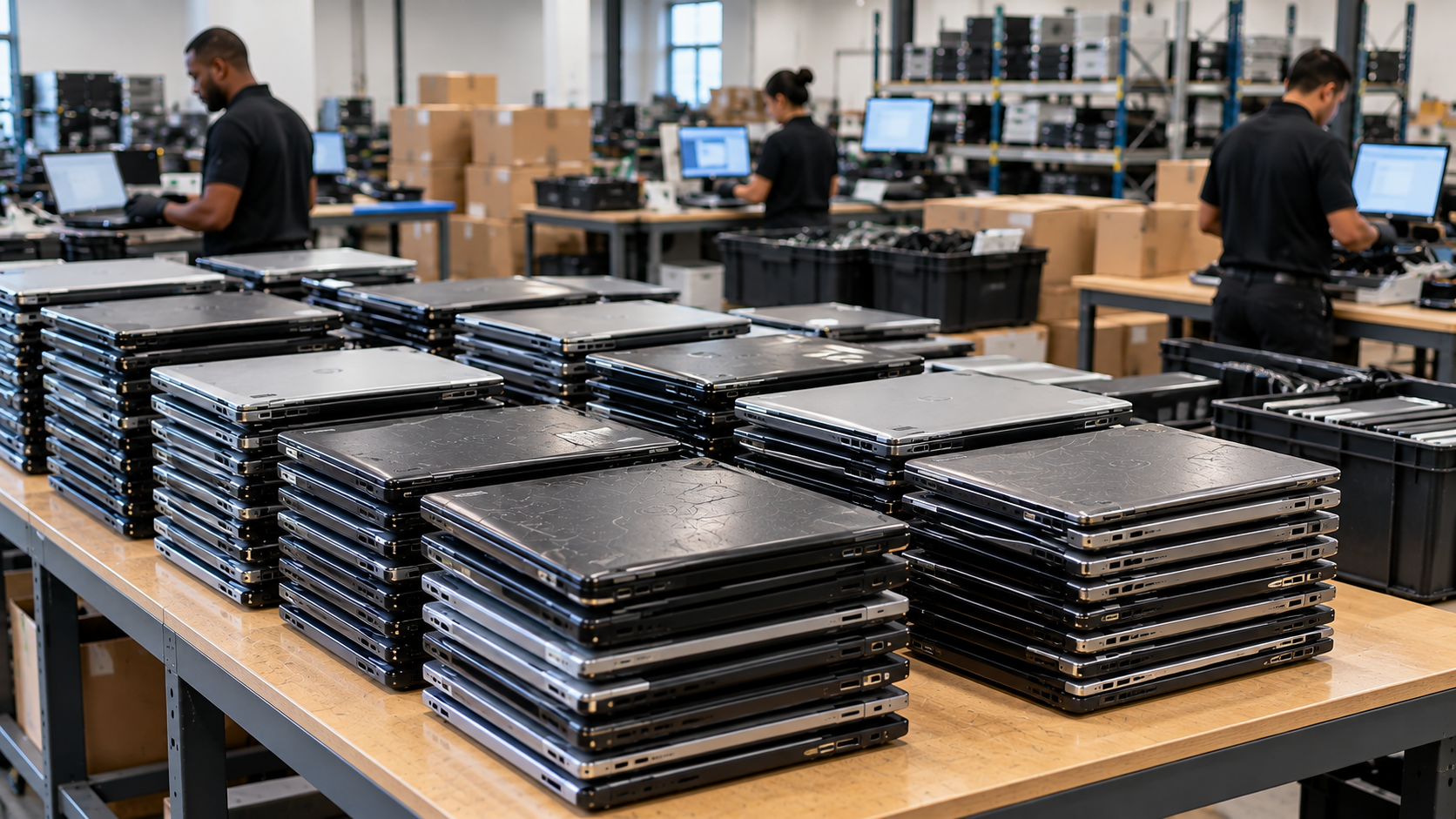
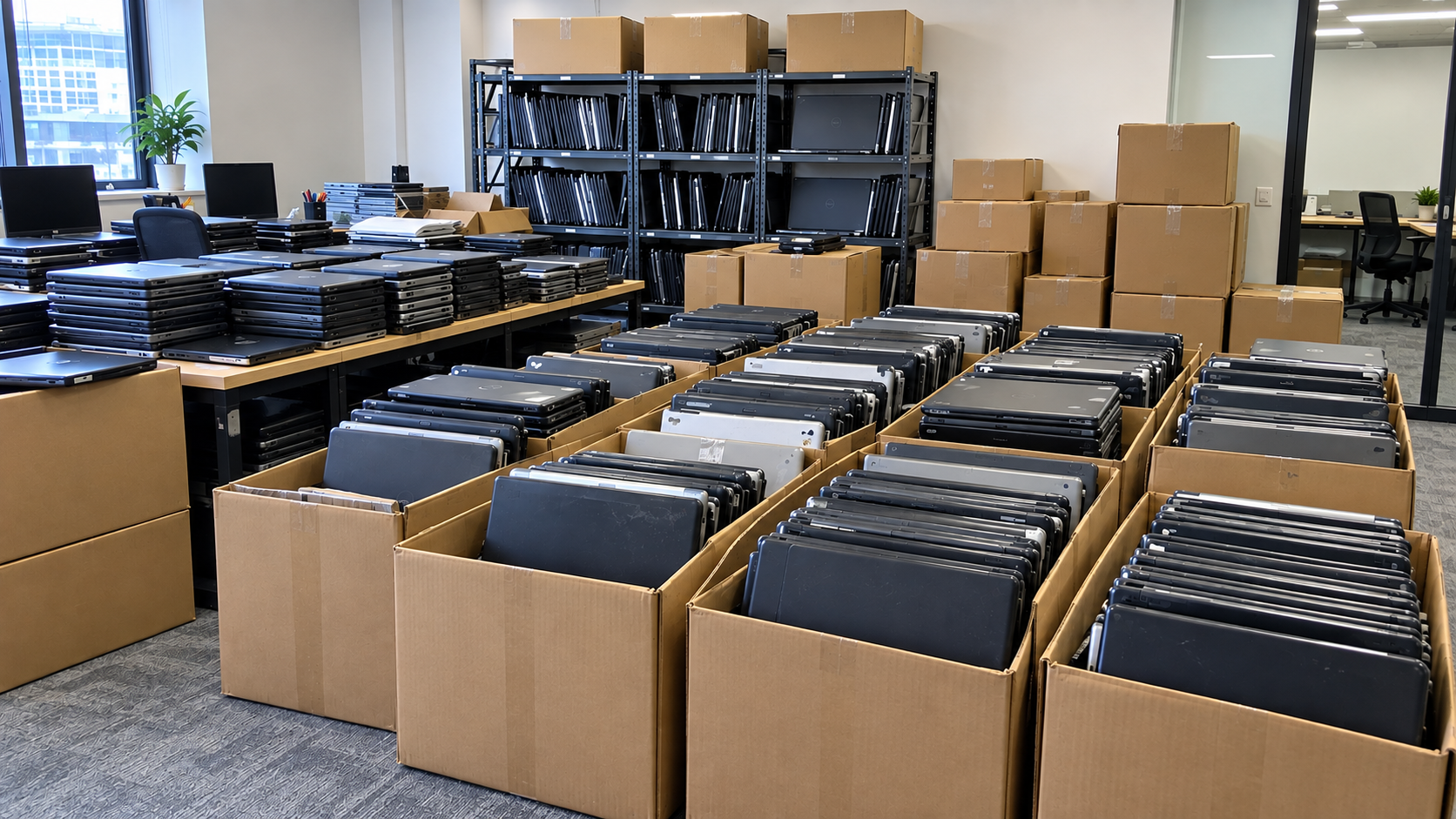
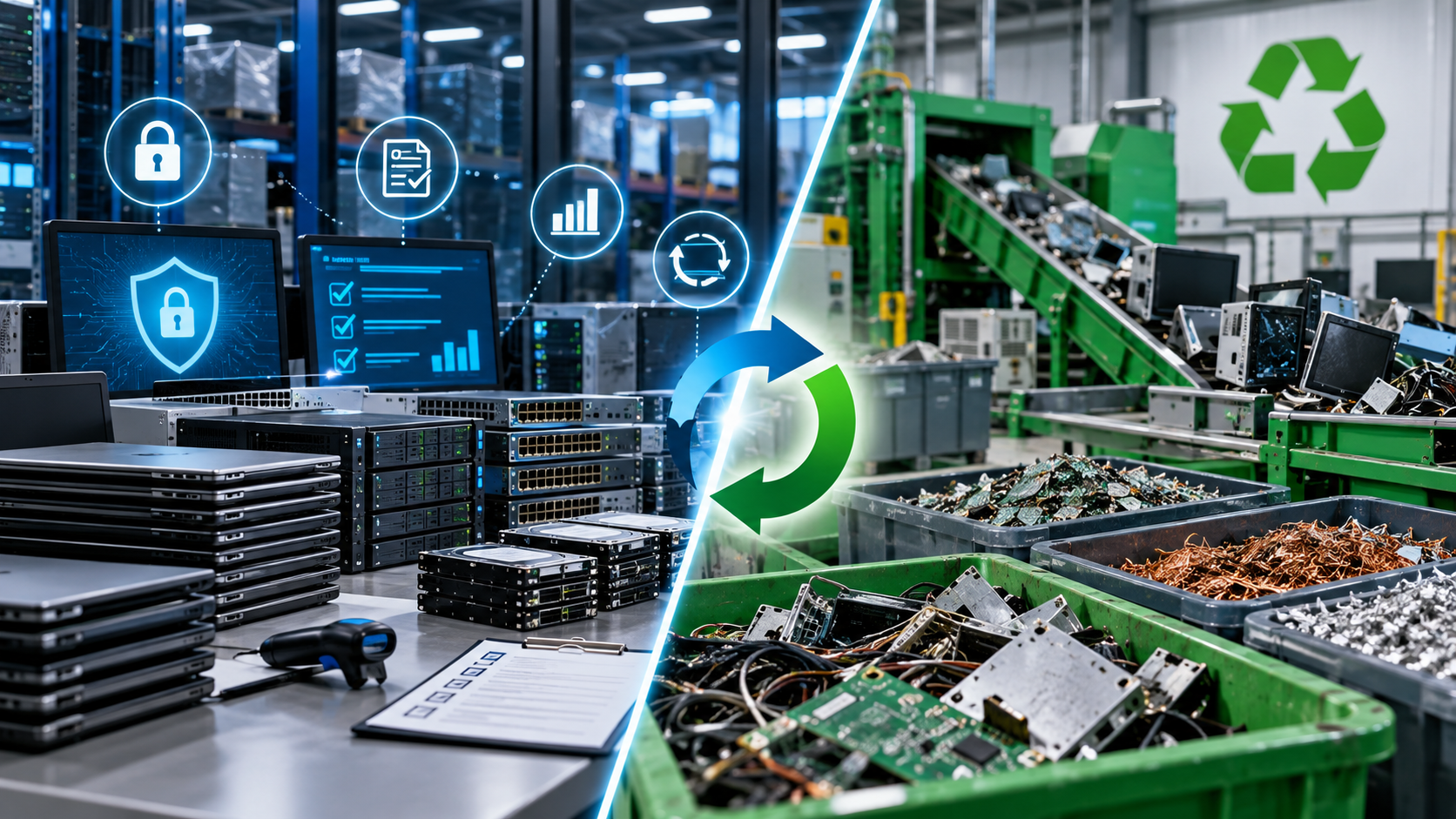
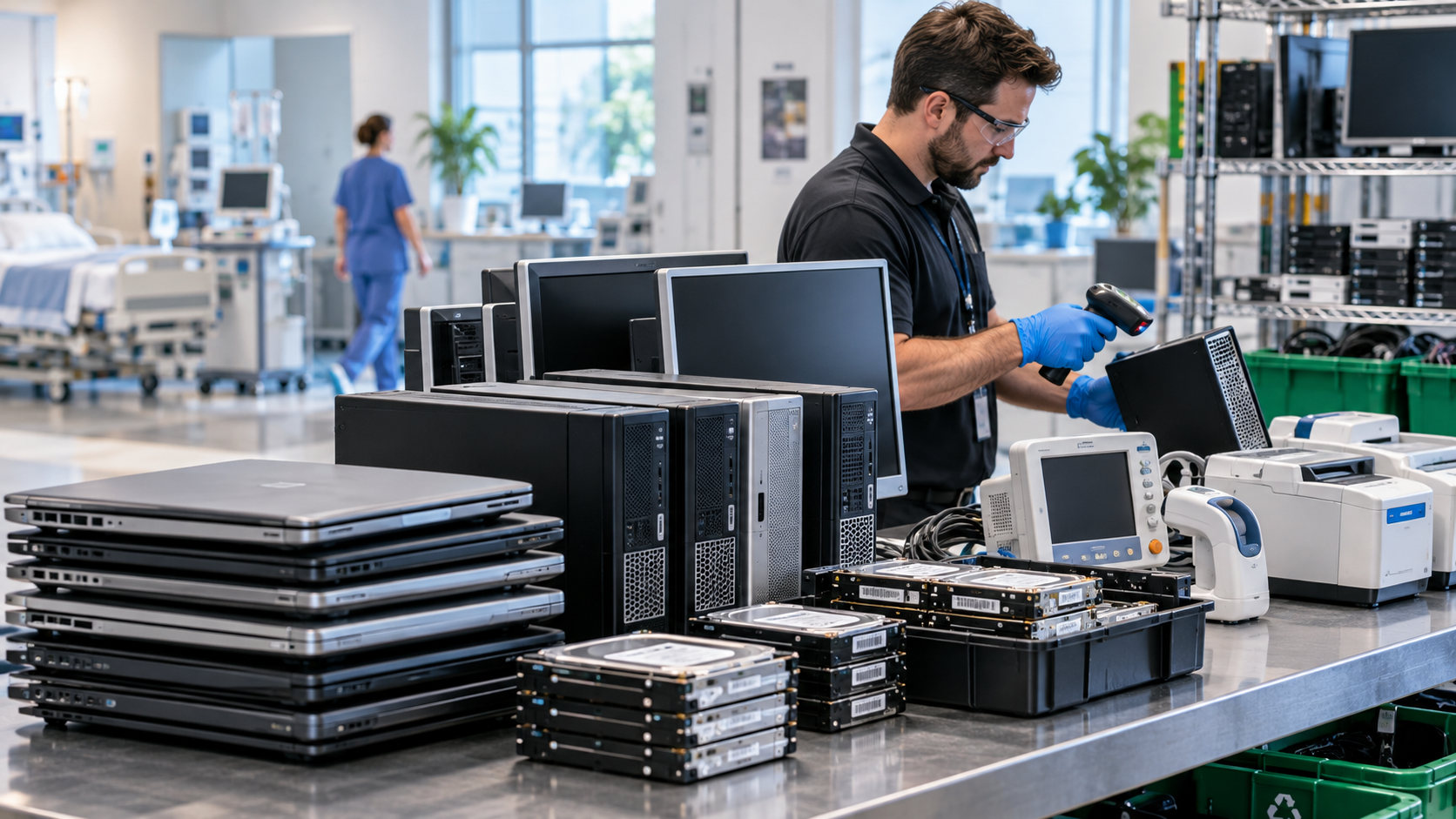
When a Houston company replaces laptops, clears an office, upgrades servers, or retires networking equipment, the job involves more than finding somewhere to take unwanted electronics. Businesses need to think about data security, equipment tracking, transportation, documentation, reuse potential, and responsible downstream recycling.
For that reason,business electronics recycling in Houstonis usually better approached as an organized IT asset disposition project rather than a larger version of household recycling.
A well-planned process helps a company know what equipment left its control, what happened to data-bearing devices, and where the material ultimately went.
Business Electronics Recycling Is Different From Residential Drop-Off
Houston operates municipal electronics recycling options for residents. The City’s Westpark Consumer Recycling Center and Environmental Service Centers accept residential electronics, and the City specifically describes these programs as residential services.
Businesses should not assume that a residential drop-off program is designed for commercial equipment cleanouts.
The Texas Recycles Computers Program makes a similar distinction. Manufacturer programs required under the state system cover computers purchased primarily for personal or home-business use. TCEQ advises commercial, government, and nonprofit organizations to explore options through manufacturers, retailers, charities, and other appropriate channels.
A Houston business retiring significant quantities of equipment will generally need a commercial recycling or IT asset disposition solution suited to its volume, security requirements, and logistics.
Start With an Accurate Asset Inventory
Before equipment is moved, determine exactly what is being retired.
An inventory might include:
Desktop computers and laptops
Servers and storage arrays
HDDs and SSDs
Monitors
Network switches and routers
Mobile devices
Printers and multifunction devices
UPS systems
Cables and peripherals
Telecom or specialized electronic equipment
For higher-risk projects, record information such as manufacturer, model, serial number, asset tag, device category, and storage-media status.
This inventory provides a baseline against which equipment can be reconciled after collection and processing. It also helps a recycling provider understand the project’s volume before scheduling transportation.
Treat Data-Bearing Equipment as a Security Issue
One of the biggest differences between ordinary recycling and business ITAD is the presence of company data.
A laptop may contain employee records. Servers may hold customer information. Storage systems could contain years of operational data. Even equipment being discarded because it no longer works can still contain readable storage media.
NIST’s current SP 800-88 Rev. 2, Guidelines for Media Sanitization, published in September 2025, defines media sanitization as a process that makes access to target data infeasible for a given level of effort. The guidance recommends building an enterprise sanitization program and selecting controls according to information sensitivity and disposal or reuse requirements.
Businesses should therefore establish what should happen to each category of data-bearing equipment before pickup.
Some devices may be suitable for validated sanitization and reuse. Others may require physical media destruction under company policy or applicable contractual and regulatory requirements.
Simply deleting files should not be treated as an enterprise data-destruction strategy.
Maintain Chain of Custody
Data security does not begin when a hard drive reaches a processing facility. It begins when the equipment is removed from service.
A useful ITAD workflow should establish accountability as equipment moves through collection, staging, transportation, processing, reuse, destruction, and recycling.
For Houston businesses, questions worth asking include:
Who will collect the equipment?
Will asset tags or serial numbers be recorded?
How will equipment be secured during transportation?
Where will the equipment be processed?
How are data-bearing devices separated and controlled?
Can individual assets be traced through the process?
What happens if an asset cannot be located or processed as planned?
The answers should match the sensitivity and risk profile of the project. A small batch of obsolete monitors does not necessarily require the same controls as hundreds of drives containing confidential corporate information.
Depending on the project and provider, businesses may request documentation such as an asset inventory, reconciliation report, certificate of recycling, or records documenting data sanitization or destruction.
The terminology and contents of these documents can vary between providers, so clarify requirements before approving the project.
If your internal security team expects serial-level destruction records, for example, confirm that the provider can produce them rather than assuming a generic certificate will contain that information.
Documentation can also help IT, finance, procurement, compliance, and sustainability teams close out asset-retirement projects internally.
Evaluate Recycler Certifications Carefully
The U.S. Environmental Protection Agency recommends that businesses, governments, and large purchasers use certified electronics recyclers for unwanted electronics. EPA identifies two accredited electronics-recycling certification standards in the United States:R2 and e-Stewards.
Certification provides a useful due-diligence signal because certified facilities are independently audited against requirements covering areas such as environmental practices, worker health and safety, security, and downstream management.
Do not stop at seeing a certification logo.
Verify the certification status of the facility that will actually handle your equipment, examine its scope, and confirm that the services you need are covered.
For especially sensitive media destruction, organizations may also encounter i-SIGMA NAID AAA Certification, which covers physical media destruction and electronic media erasure through audited certification programs.
Understand Texas Recycling Requirements
Electronics recycling businesses operating in Texas can be subject to TCEQ requirements depending on their activities and facility structure. TCEQ publishes compliance resources covering electronics recycling facilities and the state’s computer and television recycling programs.
This does not mean every Houston company generating obsolete electronics needs to become an expert in recycling regulation.
It does mean vendor selection should include questions about how the provider manages electronics under applicable Texas requirements and where materials go downstream.
What to Ask a Houston Electronics Recycling Provider
Before committing to a business recycling project, ask:
What types of electronics do you accept?
Is pickup available for our Houston location?
Is there a minimum quantity?
How are assets inventoried?
How are HDDs and SSDs sanitized or destroyed?
Can we specify destruction requirements?
What chain-of-custody controls are used?
What documentation will we receive?
Is the processing facility R2 or e-Stewards certified?
Are any materials sent to downstream vendors?
Can reusable equipment be remarketed or redeployed?
Are there items that carry processing or transportation charges?
Providing accurate quantities and equipment types when requesting a quote makes it easier to determine the appropriate recycling or ITAD solution.
Frequently Asked Questions
Can Houston businesses use the city’s residential electronics recycling centers?
Houston’s municipal electronics recycling information describes facilities such as Westpark as accepting residential electronics. Businesses with commercial quantities should confirm eligibility rather than assuming residential drop-off programs apply to them.
Does every business hard drive need to be physically shredded?
No. The appropriate sanitization or destruction method depends on the storage technology, information sensitivity, reuse plans, organizational policy, and any applicable legal or contractual requirements. NIST recommends a risk-based media sanitization program rather than one method for every situation.
Should we choose an R2 or e-Stewards certified recycler?
EPA recommends certified electronics recyclers for businesses and recognizes both R2 and e-Stewards as accredited standards. Companies should verify the actual facility’s certification, scope, and services against their project requirements.
Plan Electronics Retirement Before the Equipment Piles Up
Business electronics recycling works best when disposal is built into the asset lifecycle rather than handled as an emergency after storage rooms fill with obsolete equipment.
Inventory the assets, identify data-bearing devices, determine sanitization requirements, define documentation expectations, and evaluate who will handle each stage of the process.
LoneStar e-Waste helps businesses in the Houston area connect with appropriate electronics recycling and IT asset disposition solutions. Companies planning office cleanouts, hardware refreshes, server retirement, or recurring electronics recycling canrequest a quote with their equipment types, quantities, pickup location, timeline, and data-security requirements.