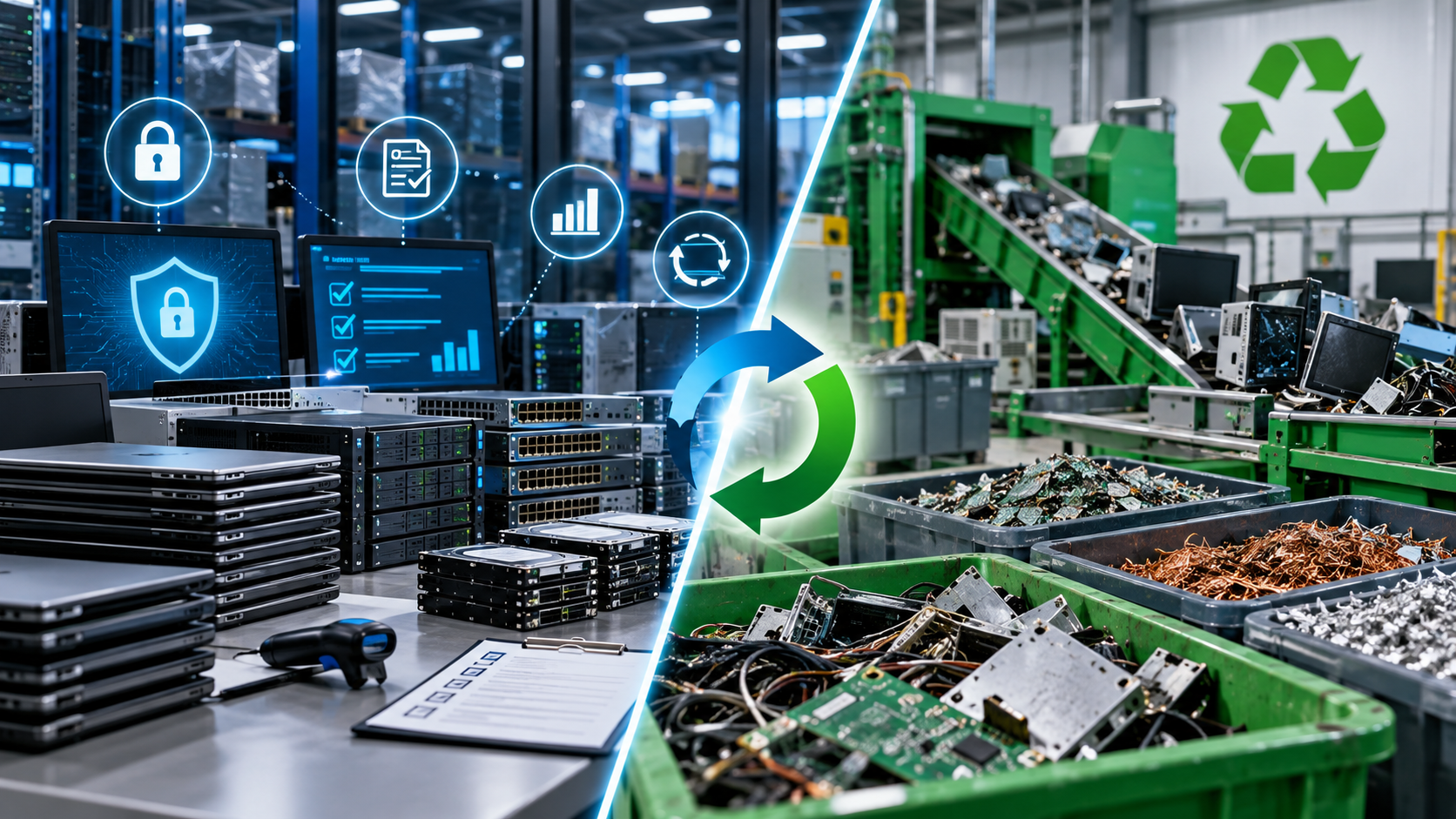
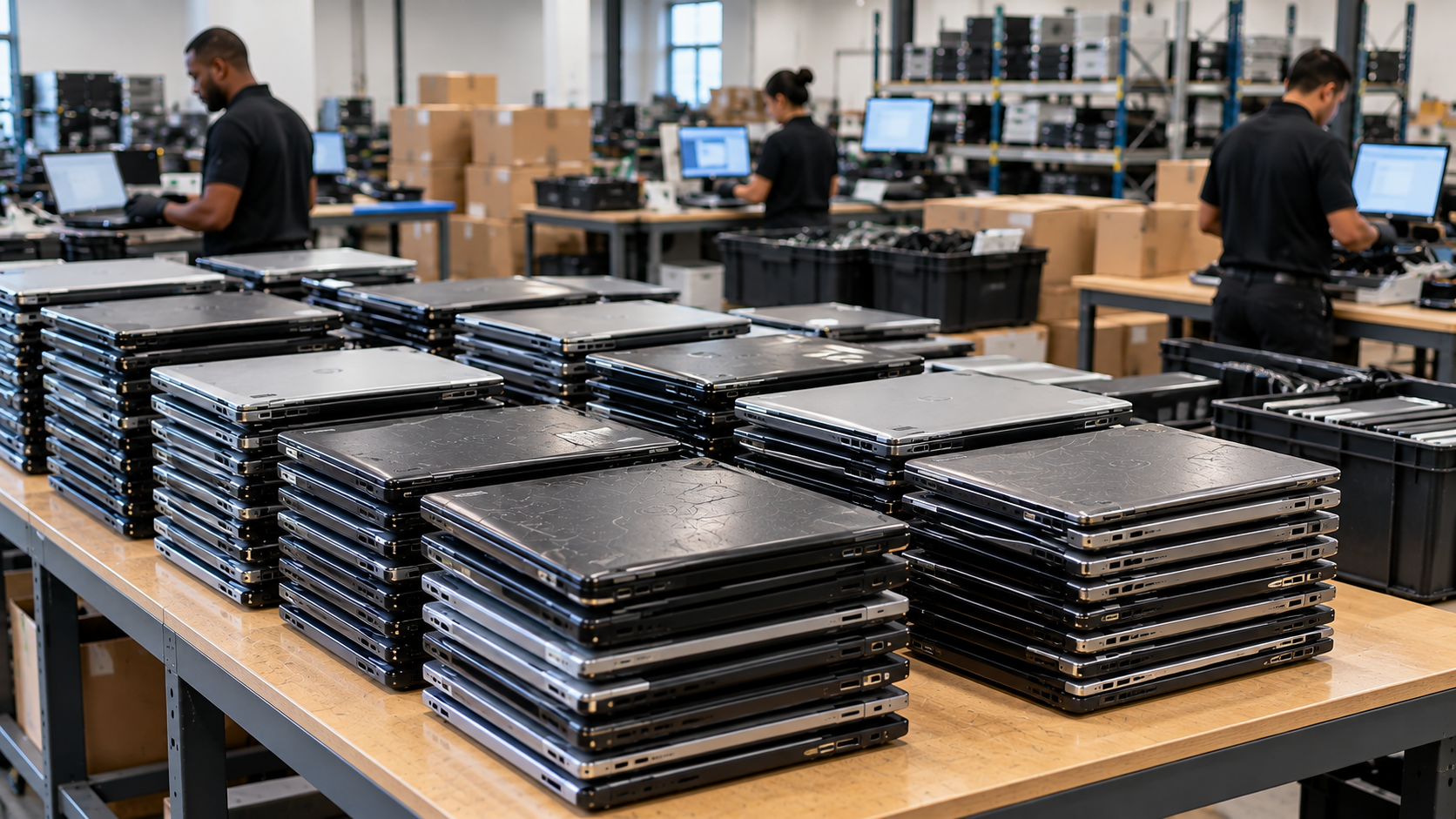
Healthcare organizations cannot treat retired computers, servers, hard drives, tablets, medical-office electronics, and networking equipment like ordinary surplus property. Devices may contain electronic protected health information (ePHI), employee records, financial data, credentials, configuration files, or other sensitive information.
A healthcare IT asset disposition (ITAD) program provides a controlled process for retiring those assets. The goal is not simply to recycle hardware. It is to identify what is leaving service, protect the information stored on it, maintain accountability while it changes hands, determine whether equipment can be reused, and responsibly recycle equipment that has reached the end of its useful life.
For hospitals, clinics, laboratories, dental practices, and other healthcare organizations, data security should drive the process from the beginning.
Why Healthcare Electronics Recycling Requires Extra Care
The HIPAA Security Rule specifically addresses the disposal and reuse of electronic media containing ePHI.
According to the U.S. Department of Health and Human Services, covered entities must implement policies and procedures governing the final disposition of ePHI and the hardware or electronic media on which it is stored. Procedures are also required for removing ePHI before media is made available for reuse.
That makes deleting files, performing a basic factory reset, or simply sending old computers to a recycler an inadequate disposition strategy for many healthcare environments.
Sensitive information can reside on more equipment than expected, including:
desktops and laptops;
HDDs and SSDs;
servers and storage arrays;
smartphones and tablets;
backup media;
printers and multifunction devices with internal storage;
network appliances; and
certain diagnostic or medical systems containing storage media.
The first step in a healthcare ITAD project should therefore be identifying which assets contain or may contain sensitive information.
Build an Inventory Before Anything Leaves the Facility
A defensible ITAD process starts with an asset inventory.
For each device, record information such as asset tag, serial number, device type, department, location, storage-media type, and intended disposition. Organizations with hundreds of assets may also want barcode scanning or serialized reporting.
The inventory establishes a reference point for the chain of custody—the documented history of who controlled an asset as it moved from the healthcare facility through transportation, sanitization, reuse, recycling, or destruction.
Before pickup, separate equipment into categories such as:
reusable equipment that still has operational value;
data-bearing assets requiring sanitization;
media requiring physical destruction; and
damaged or obsolete equipment destined for recycling.
Do not make reuse decisions before determining how stored data will be handled.
Use Current Media Sanitization Guidance
Healthcare organizations should define an approved sanitization policy rather than leaving disposal decisions to whoever happens to be clearing a storage room.
NIST Special Publication 800-88 Revision 2, Guidelines for Media Sanitization, is an important current reference. Published in September 2025, it superseded Revision 1 and provides guidance for establishing a media sanitization program based on the sensitivity of information and appropriate sanitization controls.
Depending on the storage technology, sensitivity of the information, intended reuse, and organizational policy, disposition may involve logical sanitization, cryptographic techniques, or physical destruction.
The key is verification. A healthcare organization should be able to determine what happened to each relevant data-bearing device rather than relying on an undocumented promise that drives were “wiped.”
For projects requiring detailed accountability, ask whether the provider can supply serialized sanitization or destruction records and certificates documenting completed processing.
Evaluate the Recycling and ITAD Provider
HIPAA obligations do not disappear when equipment is handed to a third party. HHS notes that covered entities may contract with business associates to perform media-disposal services. Healthcare organizations should involve their privacy, security, compliance, and legal teams when determining contractual requirements, including whether a Business Associate Agreement is appropriate for a particular arrangement.
Before selecting an ITAD or electronics recycling provider, ask:
How are assets tracked from pickup through final processing?
How are HDDs, SSDs, flash storage, and other media sanitized?
How is successful sanitization validated?
Is physical destruction available when required?
What serialized reporting is provided?
Will we receive certificates of sanitization or destruction?
How are reusable assets handled?
Where are non-reusable electronics processed?
Which downstream vendors receive equipment or materials?
Which facility certifications apply to the location processing our equipment?
Certification can provide additional third-party assurance. EPA recommends certified electronics recyclers for businesses, governments, and large purchasers and identifies R2 and e-Stewards as the two accredited electronics-recycling certification standards in the United States.
R2v3 also contains specific requirements for data security and an Appendix B applicable to facilities performing logical data sanitization, including additional tracking, recordkeeping, verification, and quality controls.
Certification should still be verified for the specific facility and services involved rather than assumed from a company name or marketing statement.
Plan Secure Pickup and Chain of Custody
The period between equipment removal and final processing deserves particular attention.
Create a pickup plan defining what equipment will be removed, who is authorized to release it, how assets will be counted, how transportation will be controlled, and when custody formally transfers.
For larger hospitals or multi-location medical groups, staged projects can reduce disruption. Departments can inventory and consolidate retired equipment before scheduled pickups while keeping data-bearing devices in controlled locations.
Documentation should reconcile the assets released with the assets received and ultimately processed.
Houston and Texas Healthcare Organizations Need Commercial Solutions
Texas’ manufacturer computer-recycling program primarily covers equipment purchased for personal or home-business use. TCEQ specifically directs commercial, government, and nonprofit organizations to investigate other options for upgrading, donating, refurbishing, or recycling computers.
That distinction matters for healthcare organizations in Houston. A clinic replacing 40 workstations or a hospital retiring servers needs a commercial process built around volume, logistics, data handling, chain of custody, and documentation—not a residential electronics drop-off program.
LoneStar e-Waste helps Houston organizations connect with appropriate local electronics recycling and ITAD solutions rather than representing itself as the facility processing the equipment.
Healthcare ITAD Checklist
Before retiring healthcare electronics:
inventory and identify every asset;
identify all potentially data-bearing devices;
confirm retention and backup requirements;
define approved sanitization or destruction methods;
document chain-of-custody requirements;
evaluate provider and facility certifications;
clarify downstream processing;
specify required serialized reports and certificates;
reconcile completed processing against the original inventory; and
retain documentation according to your organization’s policies.
A well-designed healthcare ITAD process connects data security, operational control, reuse decisions, recycling, and documentation into one workflow.
If your Houston healthcare organization is planning a computer refresh, server retirement, facility cleanout, or bulk electronics project, LoneStar e-Waste can help connect you with an appropriate electronics recycling or ITAD solution based on your equipment, volume, pickup requirements, and data-security needs.
Frequently Asked Questions
Does HIPAA require hard drives to be physically destroyed?
Not in every circumstance. HHS recognizes different approaches to removing ePHI before reuse or disposal, and the appropriate method depends on the situation. Organizations should establish methods appropriate to their data, media, risks, and policies rather than assuming physical destruction is always mandatory.
Is formatting a hard drive enough before recycling it?
Healthcare organizations should use an approved sanitization process appropriate to the media and sensitivity of the information. NIST SP 800-88 Rev. 2 provides current guidance for building a media-sanitization program and validating sanitization.
Should a healthcare organization use an R2 or e-Stewards certified recycler?
EPA recommends certified electronics recyclers for businesses and large purchasers. R2 and e-Stewards are the two accredited certification standards EPA currently identifies for electronics recyclers in the United States.