Electronics recycling can be free, but not for every device, customer, or project. The cost depends on what you are recycling, how much you have, whether pickup is required, whether the equipment still has resale value, and whether you need services such as data sanitization, hard-drive destruction, asset tracking, or formal documentation.
For Houston-area households, some no-cost options exist. The City of Houston says residential electronics are accepted at its Westpark Consumer Recycling Center at no additional charge, while Texas manufacturer take-back programs can provide free recycling for qualifying consumer computer equipment. Those programs should not be confused with commercial electronics recycling or IT asset disposition, where pricing is usually project-specific.
When Electronics Recycling May Be Free
Free recycling is most common when the collection program is manufacturer-funded, drop-off based, or supported by the value of the equipment being recovered.
Under the Texas Recycles Computers Program, manufacturers that sell covered computer equipment in the state must offer consumers a convenient recycling program that is free at the time of recycling. TCEQ says the program applies to qualifying computer equipment purchased primarily for personal or home-business use, and manufacturers are generally responsible for their own brands.
Houston residents also have municipal options through the Westpark Consumer Recycling Center and the city’s Environmental Service Centers.
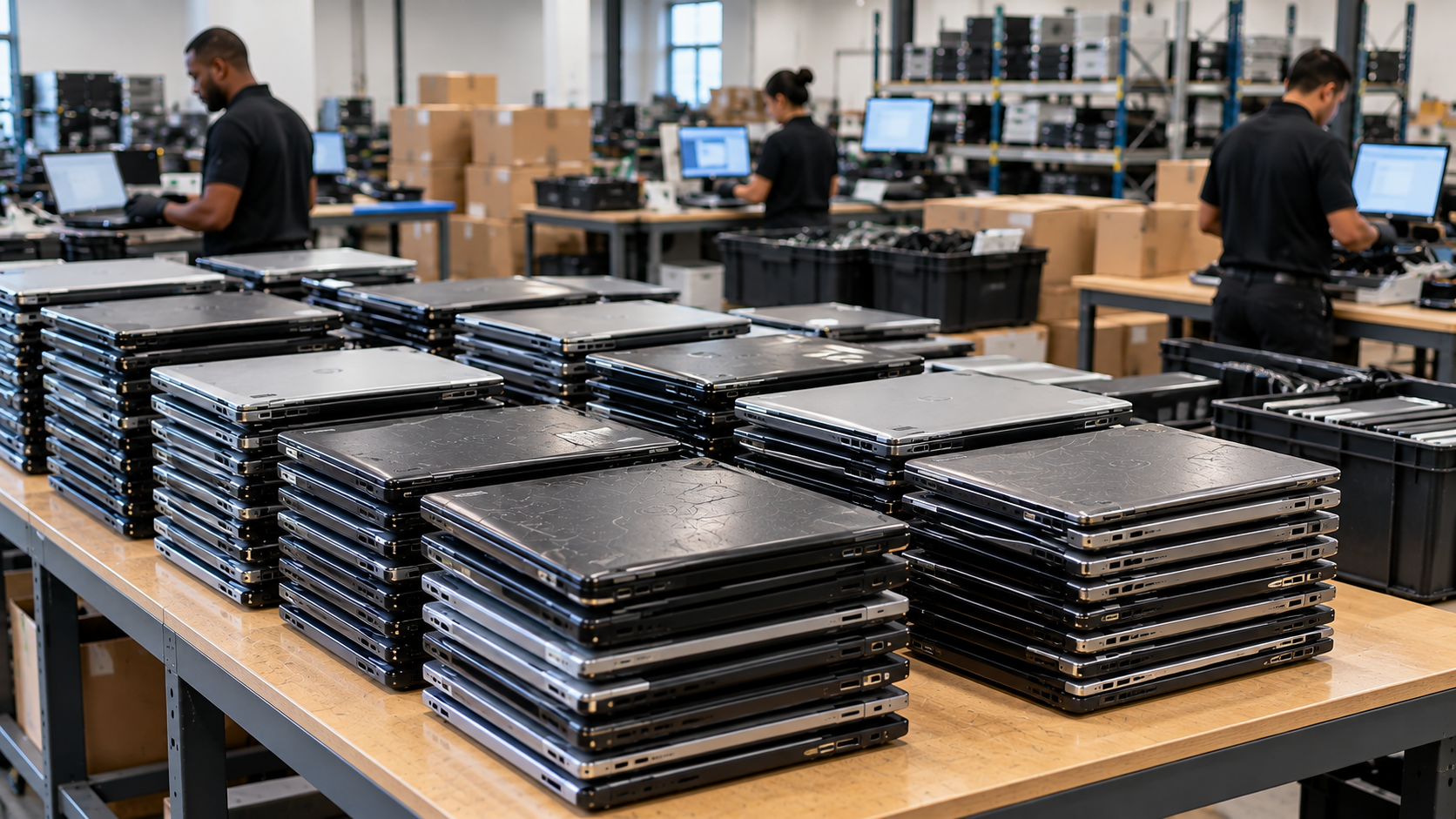
For businesses, “free recycling” can mean something different. A provider may waive or offset processing charges when a project includes newer laptops, servers, networking equipment, or other assets with resale or recoverable material value. That depends on the inventory and the provider; it should not be assumed before evaluation.
What Makes Electronics Recycling Cost More?
1. The type of equipment
Not all electronics are equally economical to process. Small computers and business IT equipment may have reusable parts or commodity value. Bulky, damaged, low-value, or difficult-to-process equipment can create more handling and downstream costs. TCEQ also notes that some electronic components may require specific environmental management once they become waste.
2. Pickup and logistics
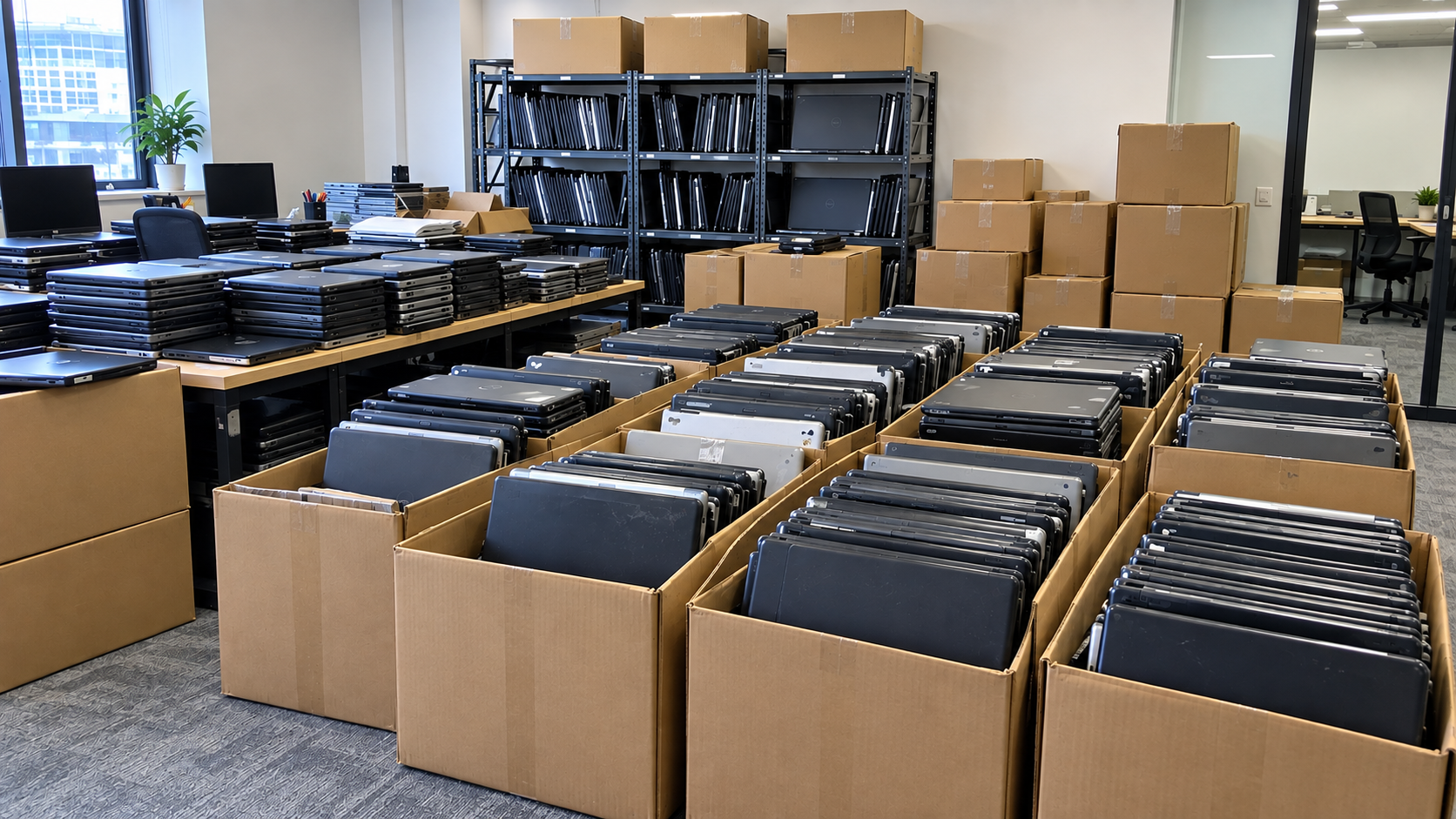
Dropping off a few devices is very different from removing hundreds of assets from an office, school, clinic, warehouse, or data center.
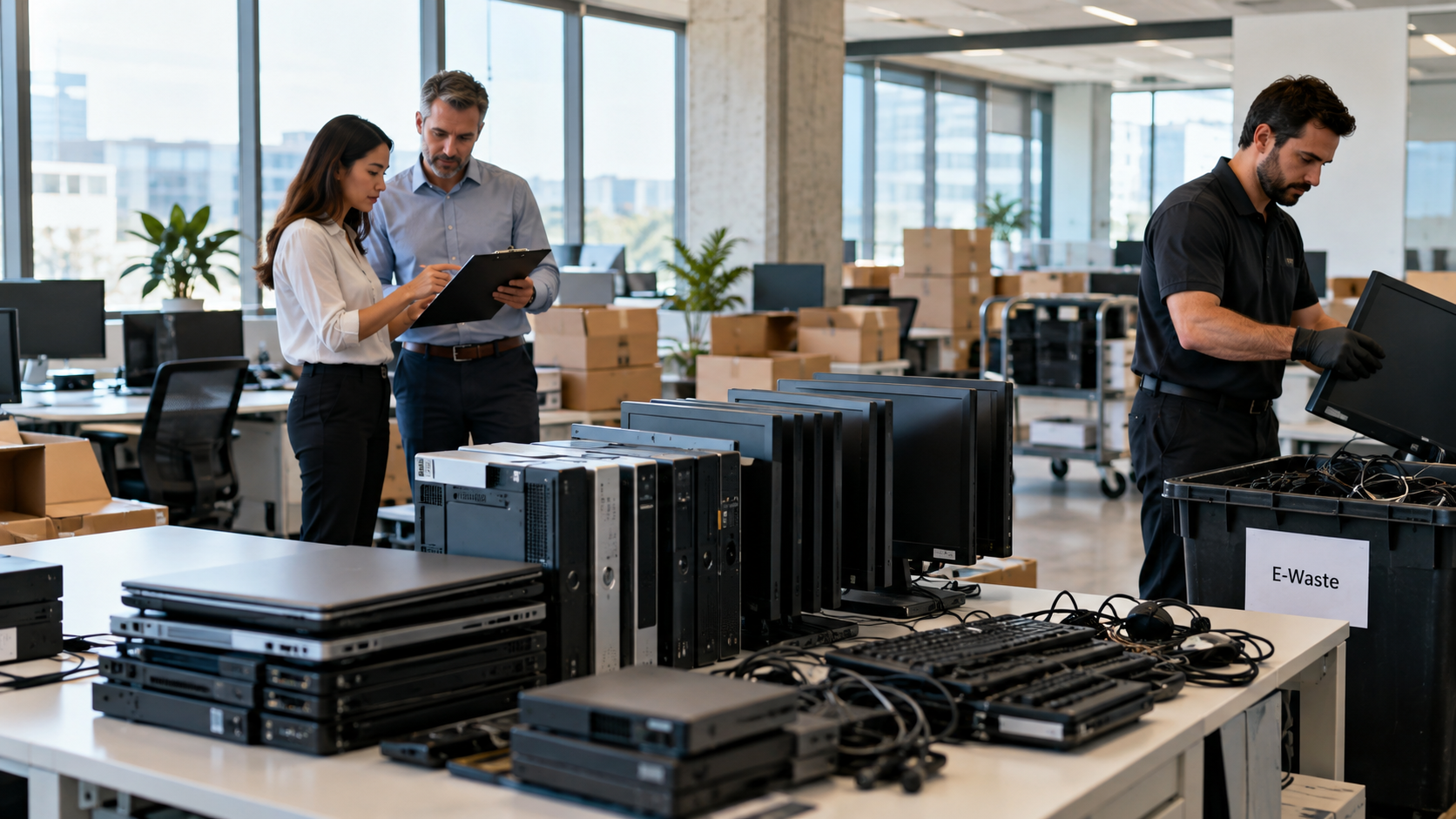
Commercial projects may require packing, loading, pallets, trucks, scheduled pickup windows, stair or dock access, multiple locations, or after-hours removal. Those logistics can materially affect the quote.
3. Data destruction
Data-bearing equipment adds work. Hard disk drives, solid-state drives, servers, laptops, phones, tablets, and some printers may contain sensitive information.
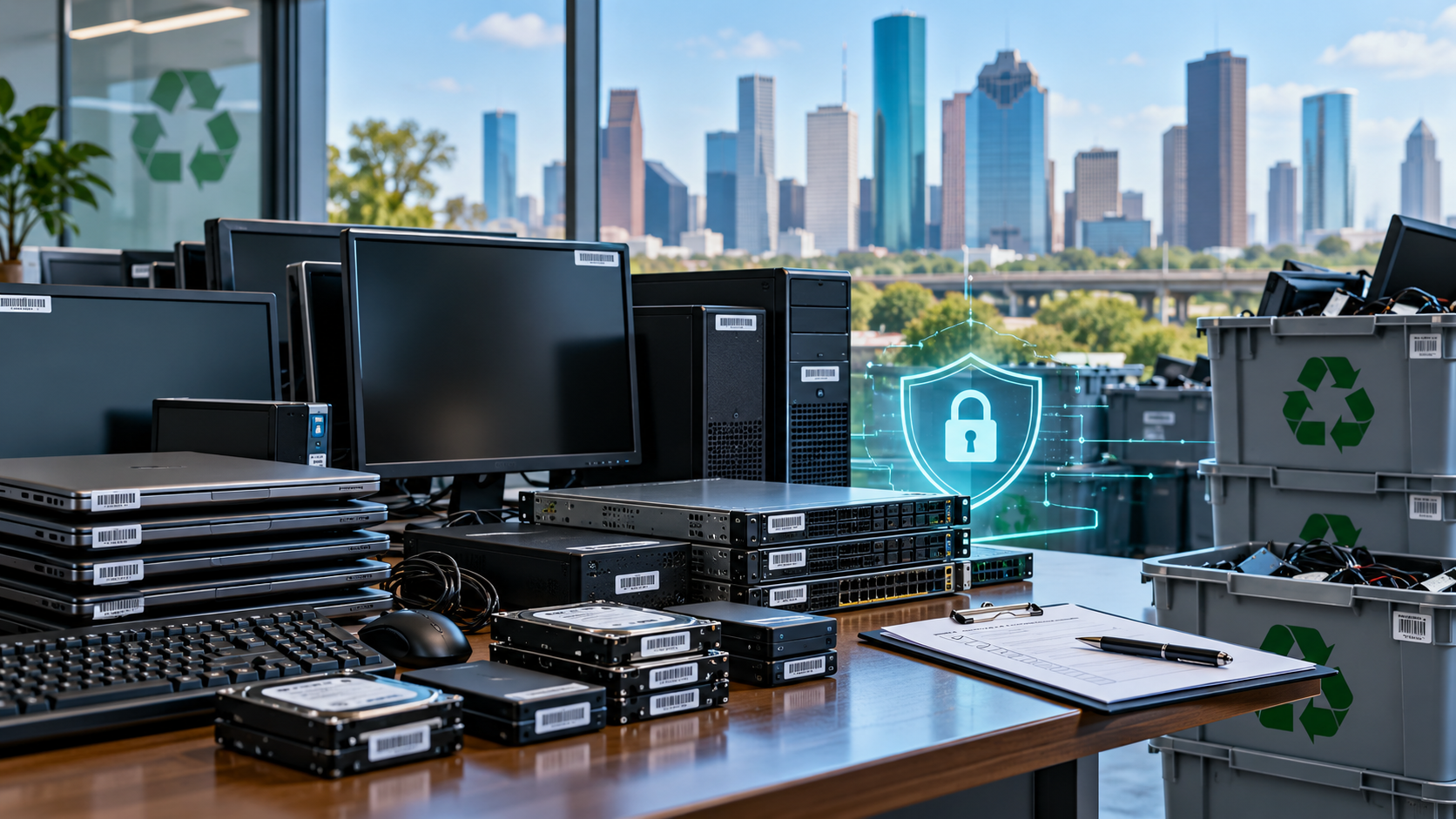
NIST SP 800-88 Rev. 2 defines media sanitization as making access to target data infeasible for a given level of effort and emphasizes a structured sanitization program based on information sensitivity. If a business requires documented wiping, physical destruction, witnessed destruction, serialized reporting, or certificates, those services may add cost.
4. Asset tracking and documentation
A basic recycling receipt is not the same as a detailed ITAD report.
Organizations may need serial-number capture, inventory reconciliation, chain-of-custody records, certificates of recycling, certificates of data destruction, or reports showing how assets were processed. More detailed reporting generally requires more labor and systems.
5. Reuse and resale potential
Working equipment can change the economics of a project. EPA encourages donation and reuse where appropriate, and responsible ITAD programs often evaluate whether equipment can be remarketed before recycling.
Newer devices in usable condition may generate value that offsets logistics, processing, or data-handling costs. Old, damaged, incomplete, locked, or obsolete equipment is less likely to provide that benefit.
Household Recycling vs. Business ITAD
For a household with a few computers or monitors, the lowest-cost option may be a municipal collection site or manufacturer take-back program.
A business should evaluate more than the recycling fee. The real question is what the project requires: secure removal, data handling, chain of custody, documented sanitization, pickup, asset reporting, reuse, or downstream recycling.
EPA recommends that businesses, governments, and large purchasers use certified electronics recyclers. EPA identifies R2 and e-Stewards as the two accredited certification standards in the United States. Certification does not mean every service will be free, but it provides a framework for evaluating environmental, worker-safety, and data-security practices.
What Should You Ask Before Accepting a “Free” Recycling Offer?
Before handing over electronics, confirm:
Which equipment is accepted, and which items carry fees?
Is pickup included or charged separately?
Are there minimum quantities for free pickup?
How are data-bearing devices handled?
Is sanitization or physical destruction included?
What documentation will you receive?
Can reusable equipment generate a credit or revenue share?
Where will the equipment go after collection?
Does the processing facility hold R2 or e-Stewards certification, if that matters to your organization?
A quote that separates recycling, logistics, data destruction, and reporting is more useful than a vague promise of “free e-waste recycling.”
FAQ
Is computer recycling free in Texas?
For qualifying consumers, Texas manufacturer programs provide free recycling at the time of recycling for covered computer equipment associated with participating brands. Commercial organizations should not assume those consumer programs cover business IT inventories.
Can a business get free electronics pickup?
Possibly. Pickup may be free when volume, location, equipment type, and asset value make the project economical for the provider. Other projects may have transportation or labor charges.
Does free recycling include hard-drive destruction?
Not necessarily. Data sanitization and physical drive destruction can be separate commercial services. Ask exactly what is included and what documentation is provided.
Get the Right Quote for Your Electronics
Electronics recycling is free in some situations, but the real cost depends on equipment, volume, logistics, data-security requirements, documentation, and reuse value.
LoneStar e-Waste helps Houston residents and organizations connect with appropriate electronics recycling and ITAD solutions. If you have computers, servers, monitors, storage devices, or a larger business cleanout, request a quote based on the equipment and services you need.