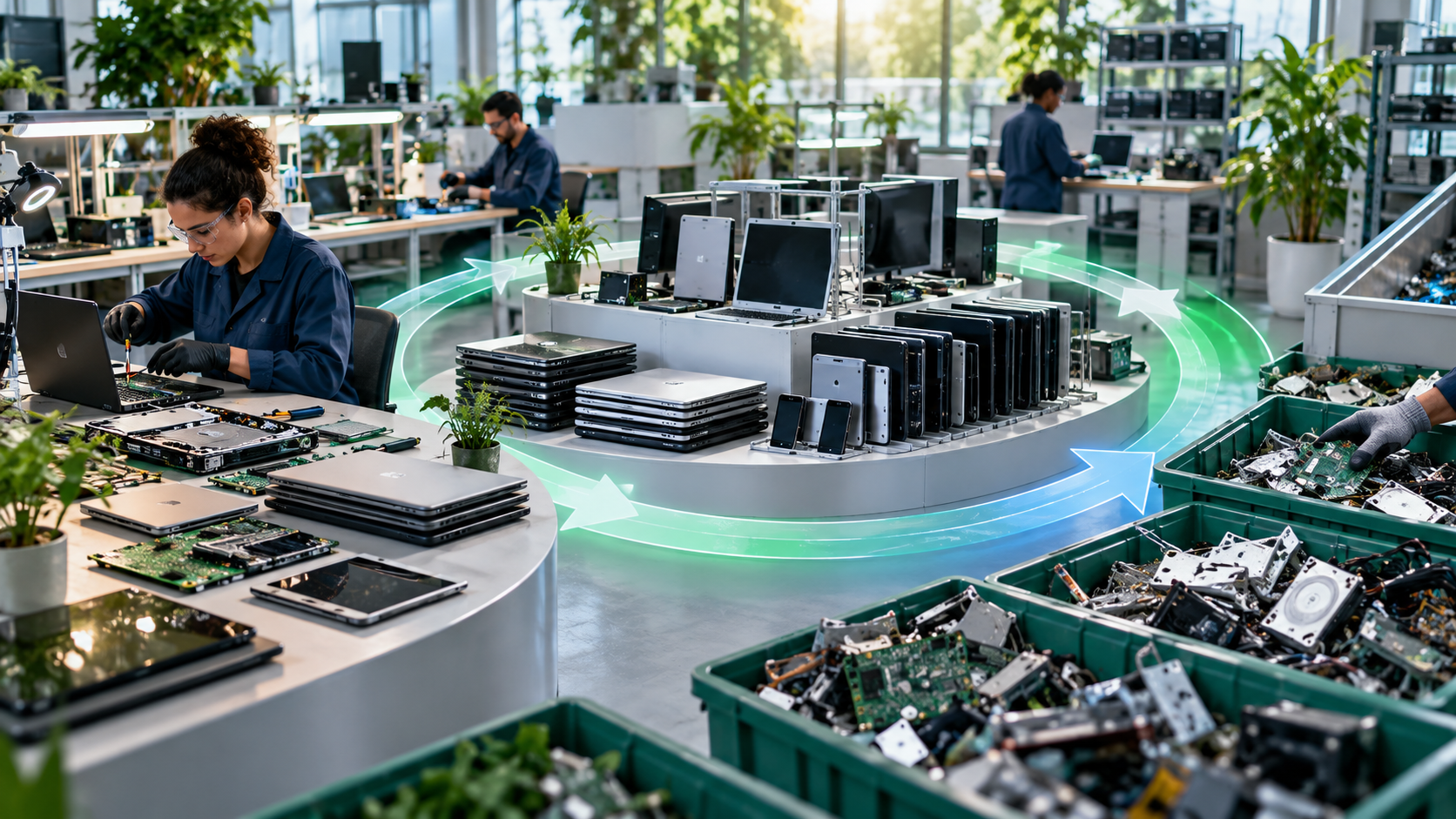

When an organization retires laptops, desktops, servers, or networking equipment, recycling should not automatically be the first destination. In responsible IT asset disposition (ITAD), equipment that can safely continue serving a useful purpose should be evaluated for reuse before it is broken down for raw materials.
That order matters because reuse preserves more of an asset’s existing value. Recycling can recover metals, plastics, glass, and other materials, but reuse keeps the finished device—or usable components—working longer. The U.S. Environmental Protection Agency places source reduction and reuse above recycling in its waste-management hierarchy and notes that extending the life of electronics through reuse keeps valuable products out of the waste stream longer.
What “Reuse First” Means in ITAD
Reuse does not mean handing an old computer to a new owner without inspection. A responsible reuse process determines whether equipment is suitable for another life and addresses data security, functionality, safety, condition, and destination.
Reuse may include redeploying equipment within the same organization, repairing or refurbishing devices, reselling marketable assets, donating suitable equipment, or harvesting functioning components for repairs. If a device cannot be reused safely, securely, legally, or economically, materials recovery becomes the appropriate next step.
This hierarchy is built into leading electronics-management frameworks. SERI, which administers the R2 Standard, says R2 prioritizes reuse before recycling. R2v3 guidance calls for evaluating electronics and components for reuse first and maximizing materials recovery when reuse is no longer viable. e-Stewards likewise treats proper reuse and refurbishment as part of responsible electronics management.
Why Reuse Can Preserve More Value
A working laptop contains more than recoverable commodities. It also contains the value already invested in manufacturing a complete motherboard, display, memory, processor, enclosure, power system, and other components. If the device still has useful life, dismantling it for materials gives up that functional value.
For businesses, reuse may also create financial recovery through resale, redeployment, or parts harvesting. Actual recovery depends on age, specifications, condition, demand, testing costs, logistics, and data-security requirements, so reuse will not make financial sense for every asset.
The goal is not to keep obsolete equipment circulating indefinitely. It is to avoid prematurely destroying equipment that still has legitimate useful life. EPA’s sustainable materials management approach emphasizes using and reusing materials productively across their life cycles rather than treating end-of-life management as a recycling-only decision.
Data Security Must Be Built Into Reuse
Fear of residual data is one reason organizations sometimes default to physical destruction. The risk is real, but destruction is not the only possible sanitization outcome for every storage device.
NIST SP 800-88 Revision 2, published in September 2025, defines media sanitization as making access to target data infeasible for a given level of effort. NIST says sanitization decisions should account for information sensitivity and organizational risk. It also notes that clear or purge techniques may sometimes be more appropriate than destruction when reuse, resale, donation, contractual obligations, or environmental considerations matter.
That does not mean every drive should be reused. Contracts, security requirements, device condition, or media characteristics may make destruction necessary. The key is to connect the organization’s data-security policy with the intended disposition of each asset.
Before equipment is released for reuse, businesses should know which assets contain storage media, what sanitization standard applies, how the result is verified, whether serialized records are available, and what happens to devices that fail sanitization or testing.
Legitimate Reuse Requires Testing and Accountability
Calling equipment “reusable” is not enough. A credible process should establish that the device or component is suitable for continued use.
R2v3 includes requirements for testing and repair activities, including defined procedures, quality controls, data sanitization, functionality categorization, and records. e-Stewards also emphasizes functionality, data security, testing, and responsible handling for electronics intended for reuse.
When evaluating an ITAD provider, ask:
- How do you determine whether equipment is reusable?
- How is data sanitized and verified before resale or donation?
- How is functionality tested and documented?
- Can usable components be recovered from devices that cannot be reused whole?
- What happens to equipment that fails testing?
- Which downstream facilities receive the assets?
- What chain-of-custody and disposition records are provided?
These questions help distinguish genuine reuse from simply moving unwanted electronics to another owner.
When Recycling Is the Better Outcome
Reuse should come first, but it should not be forced. Recycling is generally the better path when equipment is damaged beyond practical repair, lacks a legitimate reuse market, cannot be safely or lawfully resold, presents unacceptable security risk, or has reached true end of life.
At that point, responsible materials recovery can capture usable commodities and route problematic components through appropriate downstream processes. EPA encourages businesses and other large purchasers to consider certified electronics recyclers and identifies R2 and e-Stewards as the two accredited certification standards for electronics recyclers in the United States.
A Better ITAD Decision Sequence
A practical retirement process is:
- Inventory the assets.
- Identify data-bearing equipment.
- Evaluate condition, functionality, and reuse potential.
- Apply the organization’s sanitization requirements.
- Route viable equipment or components to qualified reuse channels.
- Send non-reusable equipment to responsible materials recovery.
- Retain required chain-of-custody, sanitization, and disposition records.
Responsible ITAD is not simply about getting old electronics out of a building. It is about making the right disposition decision for each asset. Secure reuse can extend useful life and preserve value; responsible recycling should follow when reuse is no longer appropriate.
LoneStar e-Waste helps Houston organizations connect with electronics recycling and ITAD solutions for retired computers, servers, storage devices, networking equipment, and other business electronics. Organizations planning a technology refresh, office cleanout, or larger retirement project can request a quote based on inventory, data-security needs, logistics, and documentation requirements.