The circular economy for electronics is an approach to designing, using, repairing, reusing, refurbishing, and eventually recycling electronic products so that devices and materials remain useful for as long as practical.
It is different from the traditional “take, make, use, discard” model. Instead of automatically treating an old laptop, server, smartphone, or monitor as waste, a circular approach first asks whether the product—or its components—can remain in productive use.
Recycling is an important part of the system, but it is not the starting point. Extending the useful life of equipment through maintenance, repair, reuse, resale, refurbishment, or parts recovery can preserve more of the value already built into a product.
That distinction matters as the volume of discarded electronics continues to grow. According to the Global E-waste Monitor 2024, the world generated 62 billion kilograms of e-waste in 2022, while 22.3% was documented as formally collected and recycled in an environmentally sound manner.
How Does a Circular Economy for Electronics Work?
A circular electronics system considers the entire life cycle of a product rather than focusing only on what happens when it is discarded.
A simplified hierarchy looks like this:
- Design products for longer use
- Maintain and repair equipment
- Reuse or redeploy working devices
- Refurbish equipment for another user
- Recover usable components
- Recycle materials when further reuse is not practical
- Properly manage residual materials
The U.S. Environmental Protection Agency emphasizes that preventing waste through reuse is preferable to waste management options such as recycling. It notes that donating functioning electronics for reuse can extend product life, while recycling becomes appropriate when reuse or repair is no longer viable.
This hierarchy is also reflected in the R2 electronics-recycling framework. SERI states that R2 supports circular-economy principles by evaluating electronics for reuse first and maximizing material recovery when reuse is no longer viable.
Reuse Comes Before Recycling
One of the biggest misunderstandings about the circular economy is that it simply means recycling more electronics.
Recycling is only one part of circularity.
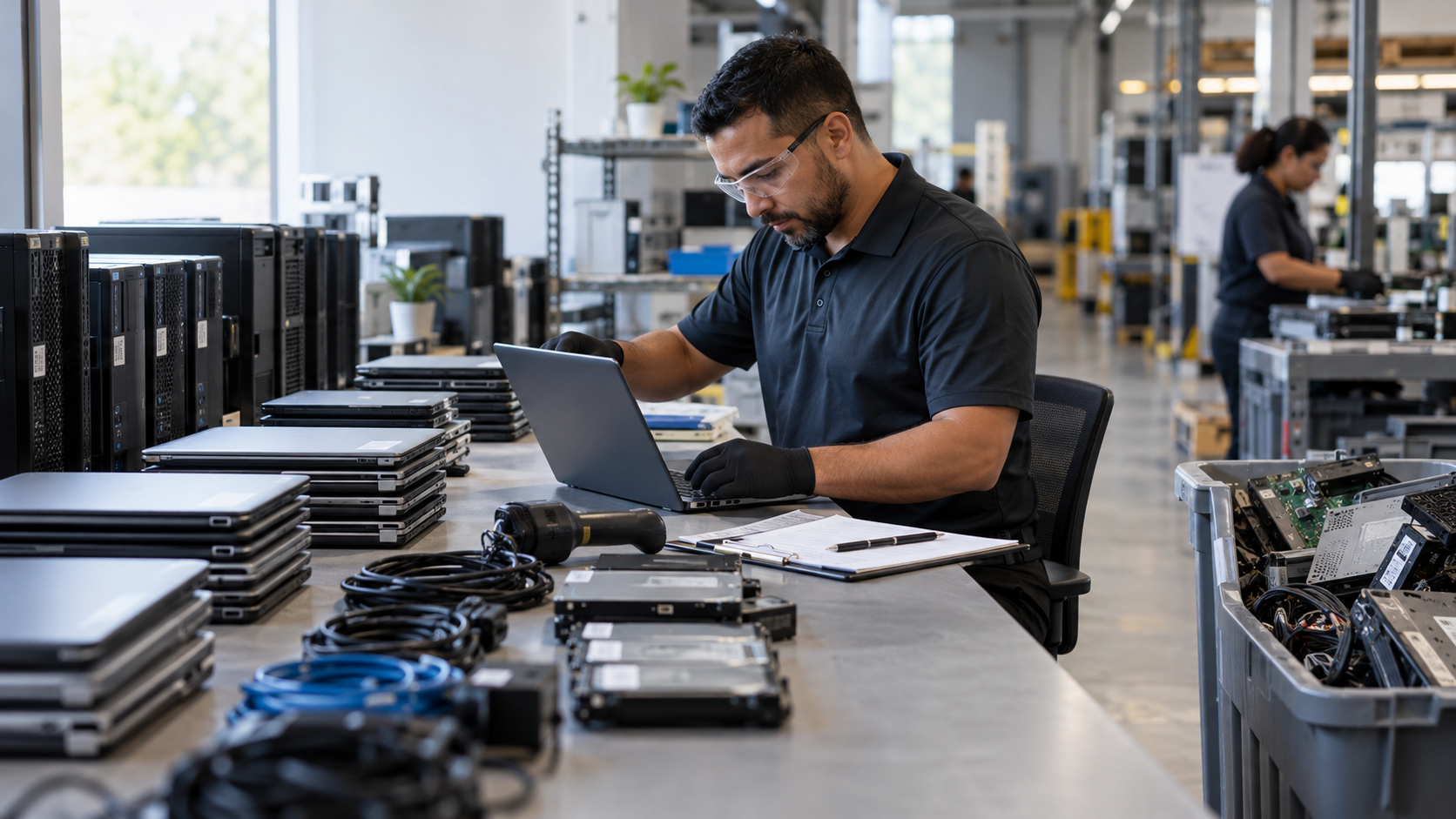
Consider a three-year-old business laptop being replaced during a company technology refresh. If it still works, immediately dismantling it for metals and plastics may destroy much of the functional value remaining in the device.
Depending on its condition and the organization’s security requirements, better options might include:
- redeploying it to another employee;
- refurbishing it;
- reselling it;
- donating it;
- harvesting working components for repair; or
- recycling it when continued use is no longer practical.
The objective is not to keep every device indefinitely. Instead, organizations should avoid destroying usable value unnecessarily.
Why Electronics Are Important to the Circular Economy
Electronics contain a complex combination of metals, plastics, glass, circuit boards, batteries, and other materials. Manufacturing them requires resources and energy, while discarded electronics can contain both valuable and potentially hazardous materials.
EPA notes that sustainable electronics management includes reuse and donation, recycling, and purchasing equipment designed with environmentally preferable characteristics.
The circular economy attempts to preserve both types of value found in technology:
Product value is preserved when an entire computer, server, phone, component, or other device continues functioning.
Material value is recovered when equipment can no longer reasonably be reused and materials are processed for recycling.
The first keeps the manufactured product in circulation. The second recovers resources that may be used again instead of allowing them to be lost through improper disposal.
What Does Circular Electronics Mean for Businesses?
For companies, circular electronics management often begins with better IT asset management.
Before disposing of retired technology, an organization can evaluate:
- Is the equipment still functional?
- Can it be redeployed internally?
- Does it have resale or refurbishment value?
- Does it contain sensitive data?
- Can useful parts be recovered?
- Which assets truly require recycling?
- How will the final disposition be documented?
This is where IT asset disposition (ITAD) can support circular-economy goals.
A structured ITAD process can combine asset inventory, data sanitization, testing, reuse, remarketing, recycling, chain of custody, and documentation. The precise process depends on equipment condition, organizational policy, data sensitivity, and available downstream markets.
Businesses should not allow sustainability goals to override data security. A reusable computer can still contain confidential information. Before equipment changes ownership, appropriate data sanitization should be part of the disposition process.
What Role Do Electronics Recyclers Play?
Responsible electronics recyclers do more than separate scrap materials.
Depending on their capabilities and certifications, organizations within the reuse and recycling chain may test equipment, refurbish devices, recover components, sanitize data-bearing assets, separate commodities, and manage downstream recycling.
EPA currently recognizes R2 and e-Stewards as the two accredited certification standards for electronics recyclers in the United States. EPA explains that certification involves independent third-party auditing against requirements covering responsible electronics management.
SERI describes R2 as covering used electronics through stages including testing, repair, reuse, and recycling.
For businesses selecting an ITAD or recycling provider, it is therefore useful to ask not only, “Do you recycle electronics?” but also:
- How do you evaluate equipment for reuse?
- How is sensitive data handled?
- Can reusable assets be tracked?
- How are downstream processors qualified?
- What documentation is provided?
- Which facilities performing the work hold relevant certifications?
How Can Individuals Participate?
Consumers also influence the circular economy through everyday decisions.
Keeping devices longer when they remain suitable, repairing equipment when practical, purchasing refurbished electronics, passing functioning devices to another user, and using legitimate recycling programs for equipment that has reached the end of its useful life all support circularity.
Before donating, selling, or recycling a data-bearing device, personal information should be appropriately removed. EPA also advises consumers to consider donation or recycling options rather than placing electronics into ordinary disposal channels.
Circular Economy vs. Electronics Recycling
The simplest distinction is this:
Electronics recycling asks: How can materials be recovered after a device is no longer useful?
The circular economy asks: How can we prevent the device and its materials from becoming waste for as long as practical?
Recycling remains essential because every device cannot be repaired or reused forever. But a truly circular system tries to retain the highest practical value before reducing equipment to raw materials.
Frequently Asked Questions
Is electronics recycling part of the circular economy?
Yes. Recycling returns recoverable materials to productive use when equipment can no longer reasonably be reused or repaired. However, circularity also includes product design, maintenance, repair, reuse, refurbishment, and component recovery.
Are all old electronics considered e-waste?
Not necessarily in a practical asset-management sense. A retired computer may no longer be useful to its current owner but could still function for another user. Proper evaluation helps determine whether equipment should be reused, refurbished, harvested for parts, or recycled.
Can businesses make money from retired electronics?
Some relatively recent or higher-value equipment may retain resale value. Whether value recovery is practical depends on age, condition, specifications, volume, data-security requirements, testing costs, logistics, and market demand.
Turning Old Electronics Into a Resource
The circular economy changes the question from “How do we get rid of this equipment?” to “What is the highest responsible use still available for it?”
For functioning technology, that may mean redeployment, resale, donation, refurbishment, or parts recovery. For equipment that has genuinely reached the end of its useful life, responsible recycling can recover materials while helping prevent improper disposal.
For Houston businesses managing retired computers, servers, networking equipment, storage systems, and other electronics, LoneStar e-Waste helps connect organizations with appropriate electronics recycling and IT asset disposition solutions. A well-planned disposition strategy can address reuse opportunities, data security, logistics, documentation, and responsible recycling as parts of the same process.