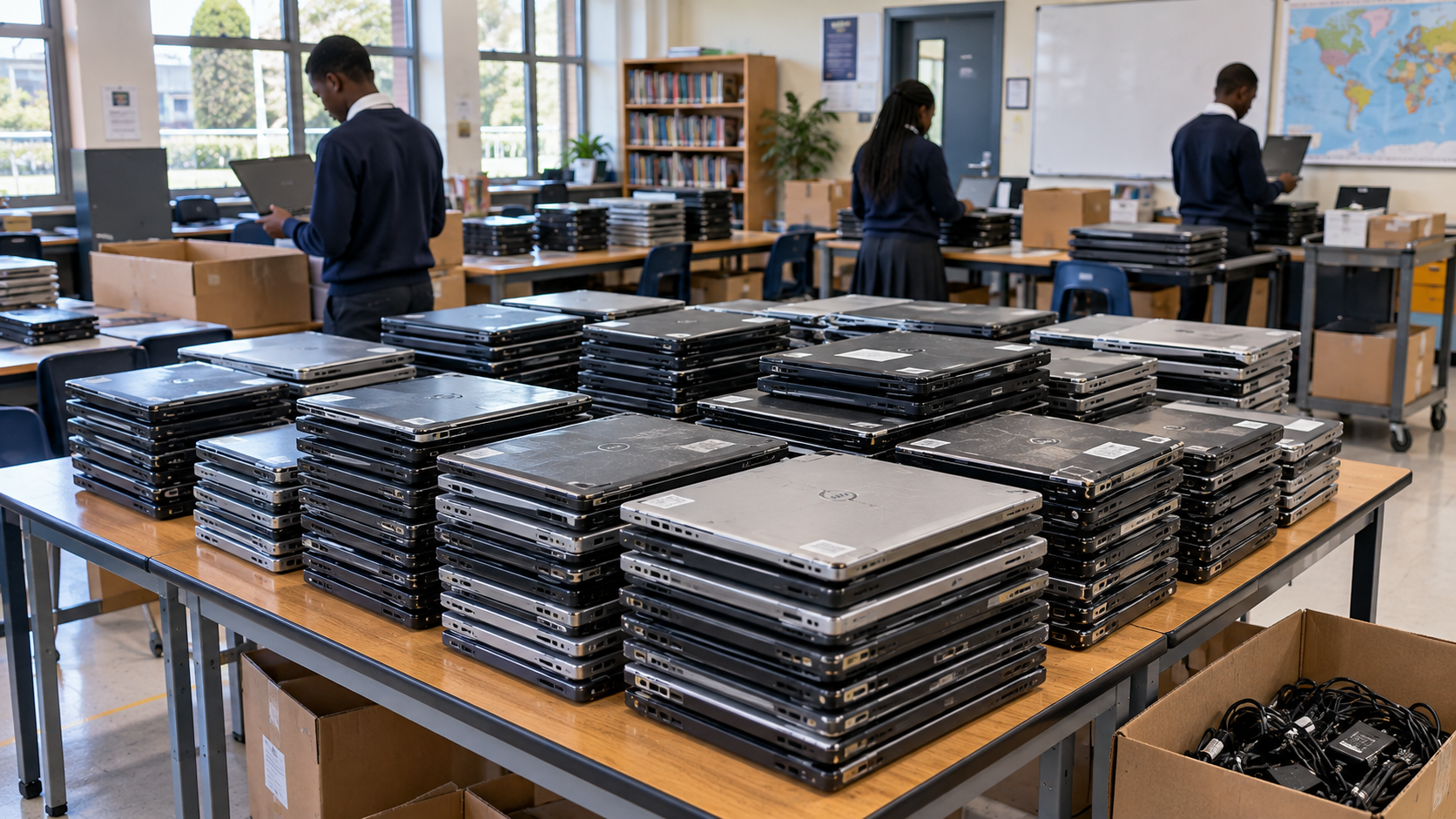
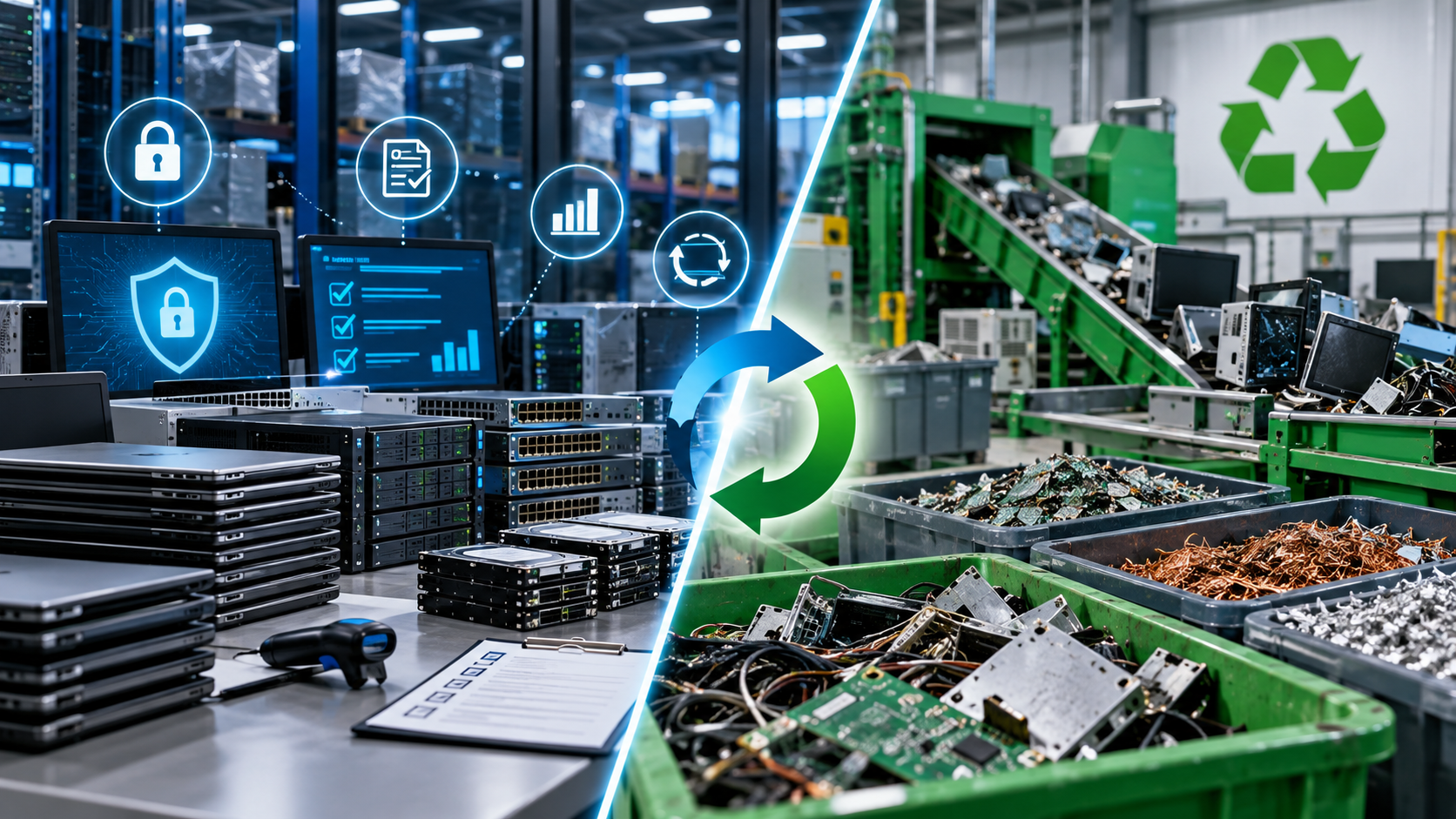
Retiring business technology is not a single disposal event. A complete IT asset disposition process is a controlled sequence for identifying equipment, protecting data, moving assets securely, determining what can be reused, routing the rest to responsible recycling, and closing the project with documentation.
For IT managers, facilities teams, security leaders, schools, healthcare organizations, and other businesses, the process matters because retired equipment can still contain sensitive information, residual value, batteries, and materials that require careful handling.
1. Build an Accurate Asset Inventory
The ITAD process should begin before equipment leaves the building.
Create an inventory of the assets being retired. Depending on the project, record:
Asset tag or property number
Manufacturer and model
Serial number
Device type
Location or department
Condition
Presence of an HDD, SSD, or other data-bearing media
This inventory becomes the baseline for pickup, processing, data sanitization, resale decisions, recycling, and final reporting.
For large refreshes or office closures, separate data-bearing assets from cables, keyboards, and other non-storage peripherals. This helps prevent laptops, servers, drives, mobile devices, or storage appliances from being treated as ordinary surplus equipment.
2. Define Data-Security and Disposition Requirements
Before collection, determine what must happen to each category of equipment.
Some assets may be candidates for reuse or resale. Others may be too old, damaged, or low-value to justify refurbishment. Data-bearing devices need an approved sanitization or destruction path based on information sensitivity and the organization’s security policies.
NIST SP 800-88 Rev. 2, published in September 2025, describes three sanitization methods: Clear, Purge, and Destroy. NIST also emphasizes verification and validation as part of sanitization assurance.
The appropriate method depends on the media, data sensitivity, and reuse plans. Destroying a drive prevents reuse, while an appropriate purge method may allow storage media to remain usable.
3. Plan Pickup and Maintain Chain of Custody
Once requirements are defined, plan how the equipment will leave the site.
Establish who can release equipment, when pickup will occur, where assets will be staged, how serialized items will be transferred, and how discrepancies will be handled.
Chain of custody is the documented record of possession and handling as assets move through the disposition process. For sensitive projects, ask how equipment is secured during staging and transportation, how serialized devices are recorded, and what happens if the received count differs from the pickup inventory.
4. Receive, Reconcile, and Sort Equipment
At the processing stage, equipment is received, identified, and sorted according to condition and required disposition.
The provider should reconcile received assets against available manifests or serialized records and flag exceptions. Equipment can then be separated into streams such as:
Reuse, resale, or refurbishment
Data-bearing devices awaiting sanitization
Components for parts harvesting
Equipment destined for materials recovery
Items requiring specialized downstream handling
A device should not be routed for resale simply because it powers on; required data-security controls must be completed first.
5. Sanitize or Destroy Data-Bearing Media
Data sanitization is one of the most security-sensitive parts of ITAD.
NIST defines media sanitization as making access to target data infeasible for a given level of effort. Its current guidance recommends an organizational sanitization program, media-appropriate methods, and documented outcomes. NIST also provides a sample Certificate of Sanitization.
If reuse is planned, the sanitization method must fit the storage technology. SSDs and other flash-based media require particular care because techniques designed for traditional magnetic hard drives are not automatically suitable for them.
6. Recover Value Before Recycling
ITAD can involve value recovery, not just waste removal.
Working laptops, servers, networking equipment, components, and other marketable assets may be tested, graded, refurbished, resold, or redeployed when security requirements and economics support reuse.
The decision should consider condition, age, configuration, resale demand, testing cost, logistics, and secure-processing cost. The goal is to identify legitimate remaining value before sending equipment into recycling streams.
7. Send Non-Reusable Equipment to Responsible Recycling
Equipment that cannot be reused should move into an appropriate recycling pathway.
The U.S. Environmental Protection Agency recommends certified electronics recyclers for businesses, governments, and large purchasers and identifies R2 and e-Stewards as the two accredited electronics-recycling certification standards in the United States.
R2v3 addresses data security and downstream recycling-chain controls, while the e-Stewards Standard covers areas including data security, downstream due diligence, reuse, and environmental management.
Certification does not remove the need for vendor due diligence. Ask which facility will handle your assets, which certifications apply to it, and how downstream vendors are managed.
8. Reconcile the Project and Review the Final Report
The ITAD process should end with records showing what happened to the equipment.
Depending on the service agreement, final documentation may include a serialized asset report, disposition status, sanitization records, certificates of sanitization or destruction, value-recovery details, recycling records, and exception notes.
Compare the final report with the original inventory. Investigate missing serial numbers, quantity differences, unexpected disposition changes, or incomplete data-destruction records before closing the project.
What to Ask an ITAD Provider
Ask how the provider handles inventory reconciliation, chain of custody, data sanitization, physical destruction, reuse, downstream recycling, certifications, transportation, exceptions, and final reporting.
A strong ITAD process should make the movement and final disposition of your assets understandable—not leave you with unanswered questions after the equipment is gone.
LoneStar e-Wastehelps Houston organizations connect with appropriate electronics recycling and ITAD solutions for computers, servers, storage devices, office electronics, and bulk technology retirement projects.
If you are planning an equipment refresh, office cleanout, relocation, or infrastructure retirement, request a quotewith your asset types, estimated quantities, data-security needs, and preferred timeline.