Replacing old computers is easy. Deciding what happens to hundreds of laptops, servers, hard drives, networking devices, and other retired technology afterward is where the risk begins.
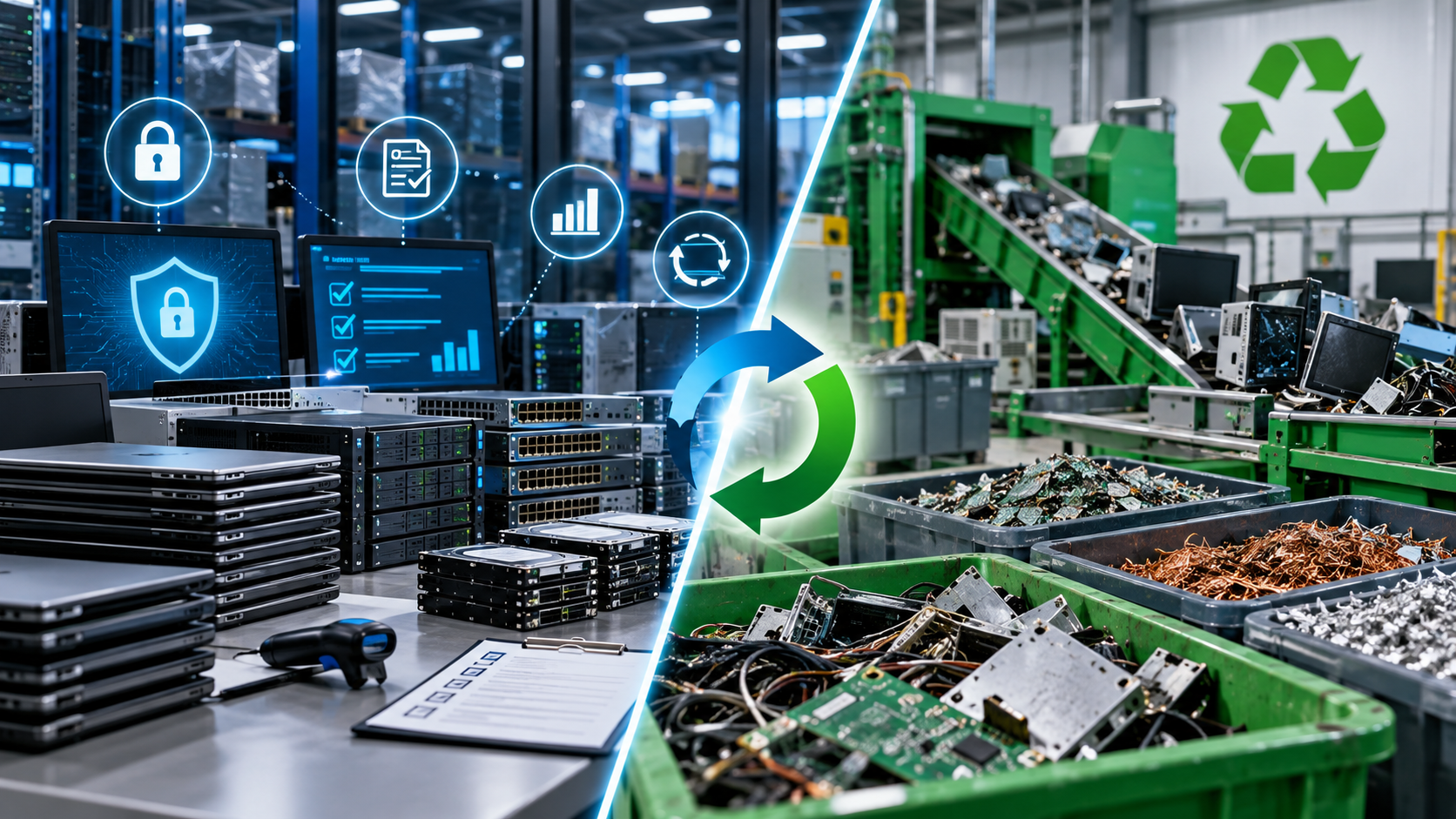
IT asset disposition (ITAD) is the structured process organizations use to retire technology assets while addressing data security, reuse, recycling, logistics, documentation, and potential value recovery. A well-planned ITAD program goes beyond simply sending old electronics to a recycler. It manages what happens to equipment from the moment it leaves service through its final disposition.
For business leaders, IT managers, facilities teams, schools, healthcare organizations, and other institutions, ITAD helps turn an equipment retirement project into a controlled business process.
What Does IT Asset Disposition Include?
An ITAD project can cover everything from a small office technology refresh to thousands of assets distributed across multiple facilities.
The process commonly includes:
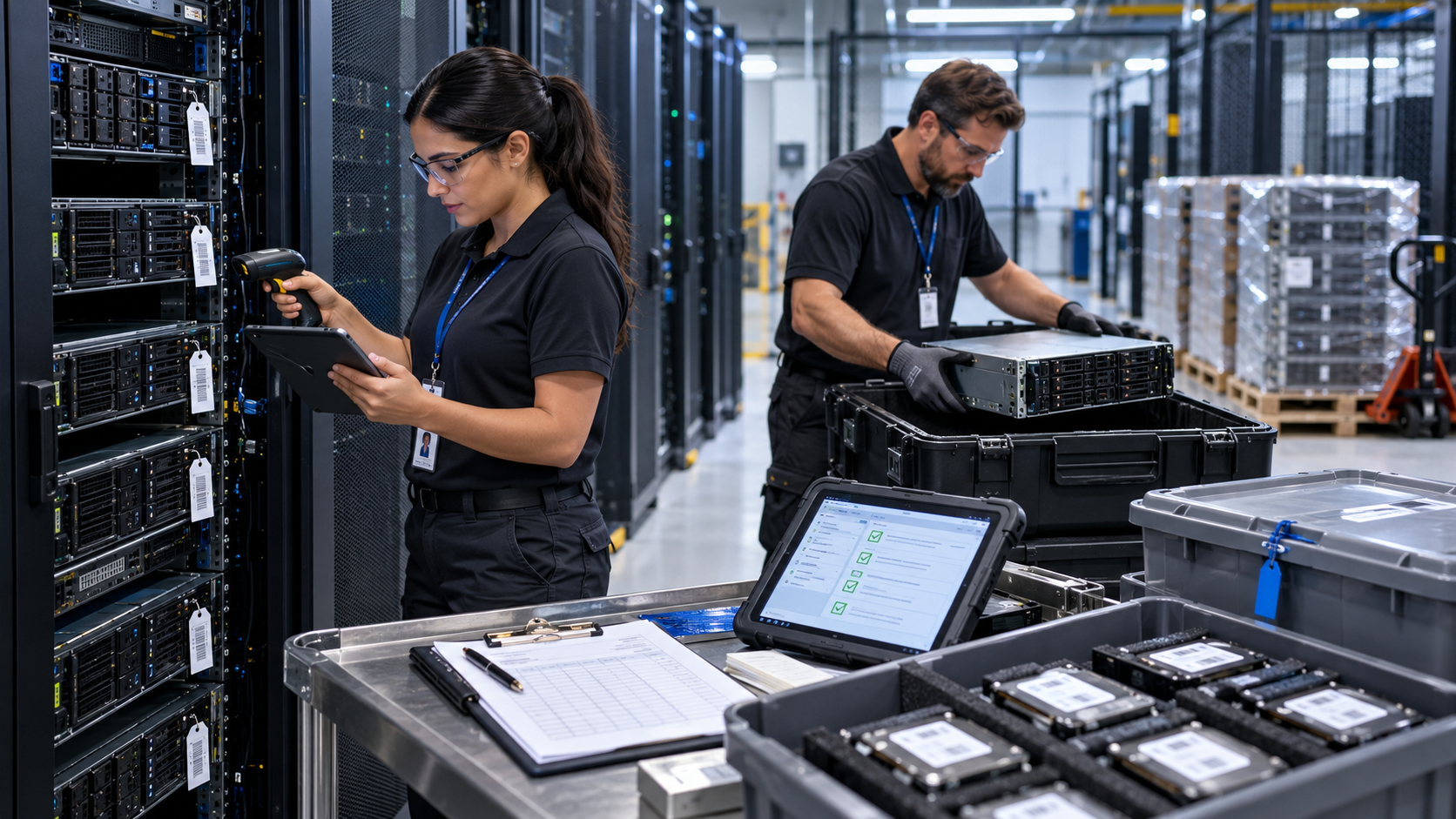
Inventorying retired IT equipment
Identifying data-bearing devices
Secure collection and transportation
Chain-of-custody documentation
Data sanitization or physical destruction
Testing equipment for potential reuse
Refurbishment or resale when appropriate
Recycling equipment that cannot be reused
Reporting and documentation
The exact process should depend on the organization, equipment, information sensitivity, contractual requirements, and internal security policies.
A company retiring 20 monitors, for example, has different concerns from a hospital decommissioning servers containing sensitive information or a corporation replacing hundreds of employee laptops.
Why Data Security Is Central to ITAD
Retired hardware can still contain valuable business information.
Hard disk drives (HDDs), solid-state drives (SSDs), laptops, servers, smartphones, tablets, and some printers or multifunction devices can contain stored data. Simply deleting files or performing an ordinary operating-system reset may not satisfy an organization’s sanitization requirements.
The National Institute of Standards and Technology defines media sanitization as a process that makes access to target data infeasible for a given level of effort. Its current guidance, NIST SP 800-88 Revision 2, published in September 2025, focuses on establishing an organizational media-sanitization program based on information sensitivity.
This matters when evaluating ITAD providers. Businesses should understand what sanitization method will be used, how successful sanitization is validated, and what records will be provided.
For equipment that will be reused, appropriate sanitization can preserve the asset while protecting information. When storage media cannot be securely reused or when organizational policy requires it, physical destruction may be appropriate.
What Is Chain of Custody in ITAD?
Chain of custody documents who controls data-bearing equipment as it moves through the disposition process.
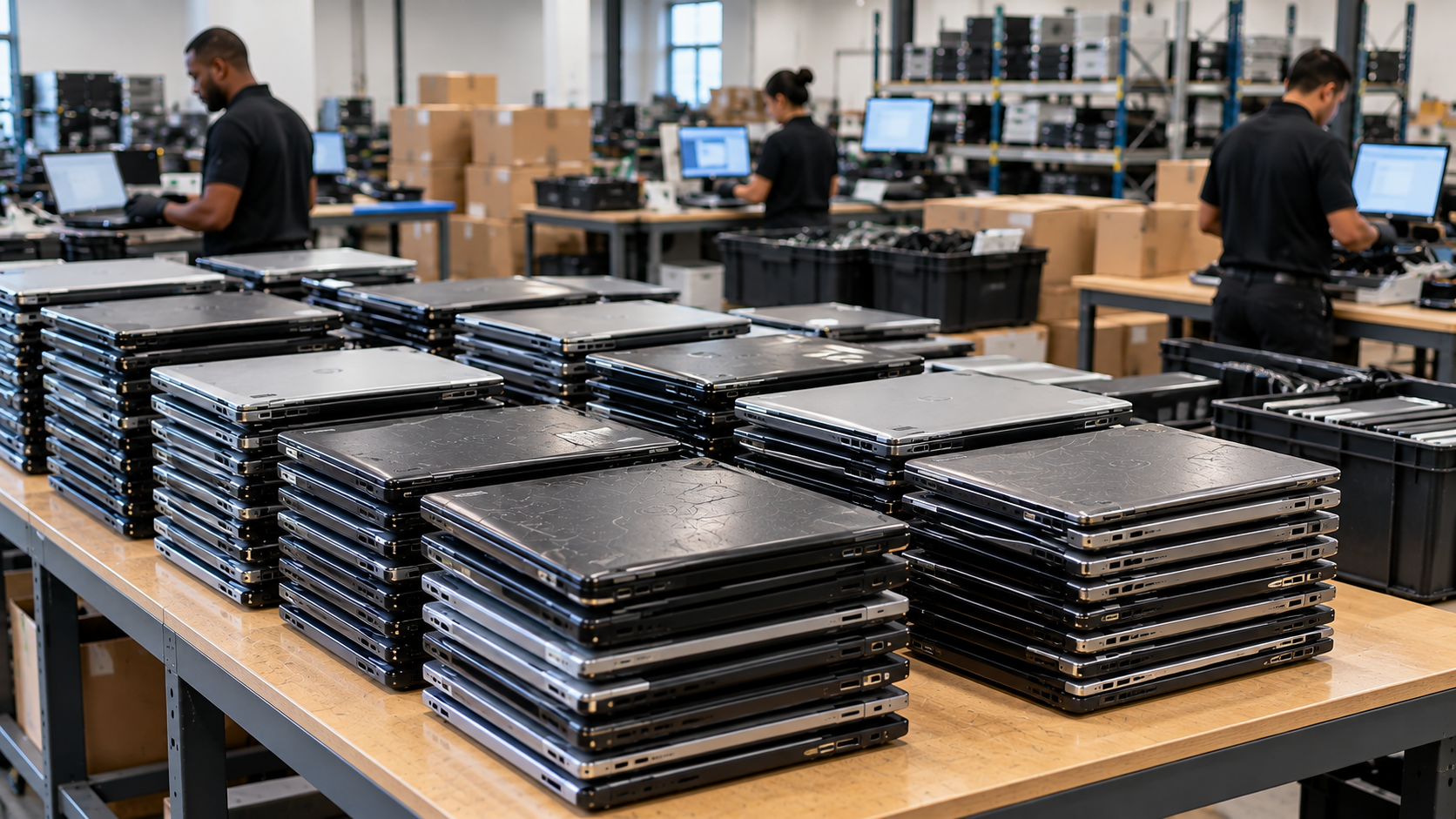
Consider a business retiring 300 laptops. The security question does not disappear when those laptops leave the office. The organization should know who collected them, where they were transported, how they were stored, and what ultimately happened to their storage devices.
Depending on the project and provider, documentation may include asset identifiers, collection records, processing records, sanitization results, and certificates of data destruction.
The e-Stewards Standard, for example, includes requirements addressing data security, downstream due diligence, and responsible management of end-of-life electronics. e-Stewards currently requires NAID AAA Certification as a prerequisite for certified processors, providing an additional framework for secure handling of data-bearing equipment.
ITAD Is More Than Electronics Recycling
ITAD and electronics recycling overlap, but they are not identical.
Electronics recycling primarily concerns processing unwanted electronic equipment and recovering or responsibly managing its materials.
IT asset disposition takes a broader lifecycle approach. It can include inventory, logistics, data sanitization, asset tracking, reuse, remarketing, recycling, reporting, and final disposition.
This distinction matters because some retired business equipment still has useful life or market value.
A three-year-old business laptop may potentially be refurbished or resold after appropriate data sanitization and testing. An obsolete or damaged device may instead be directed toward materials recovery.
A strong ITAD strategy therefore evaluates assets before deciding their final destination.
Reuse, Remarketing, and Value Recovery
Retired does not always mean worthless.
Certain laptops, desktops, servers, networking equipment, smartphones, and enterprise hardware may retain resale value. An ITAD provider may evaluate equipment to determine whether refurbishment, reuse, resale, or recycling makes sense.
Value recovery should not override security requirements. Data sanitization, inventory controls, and appropriate documentation still need to be addressed before equipment enters a secondary market.
Equipment with little resale value can then move through an appropriate recycling channel.
The U.S. Environmental Protection Agency encourages businesses, governments, and large purchasers to use certified electronics recyclers. EPA currently recognizes two accredited certification standards in the United States: R2 and e-Stewards. These standards provide frameworks for assessing environmental, worker health and safety, and security practices associated with used electronics.
What Should You Ask an ITAD Provider?
Choosing an ITAD provider should involve more than requesting a price per device.
Before turning over equipment, ask questions such as:
How will our equipment be inventoried and tracked?
When does your responsibility for our assets begin?
How are data-bearing devices secured during transportation and storage?
Which data-sanitization standards and methods do you support?
How is successful sanitization validated?
What happens when a drive cannot be sanitized?
Can reusable equipment be refurbished or remarketed?
How are non-reusable electronics recycled?
Which facilities actually process our equipment?
What reports, certificates, and asset-level documentation will we receive?
Are relevant processing facilities R2 or e-Stewards certified?
Do not assume that a provider’s certification automatically applies to every facility, service, or downstream partner involved in your project. Verify the certification scope and the specific services being offered.
When Does a Business Need ITAD?
ITAD becomes particularly useful when technology retirement involves significant equipment volume, sensitive information, multiple locations, or documentation requirements.
Common situations include office relocations, data-center decommissioning, company closures, employee laptop refreshes, server upgrades, mergers and acquisitions, school technology replacements, and healthcare IT upgrades.
Planning ITAD before equipment is disconnected can make inventory, security, logistics, and accountability easier to manage.
Frequently Asked Questions
Is ITAD the same as data destruction?
No. Data destruction or sanitization is one component of ITAD. ITAD can also cover inventory, transportation, reuse, remarketing, recycling, reporting, and final disposition.
What is NIST SP 800-88?
NIST SP 800-88 Rev. 2 is current federal guidance for establishing and managing media-sanitization programs. It superseded Revision 1 in September 2025 and emphasizes selecting appropriate controls and sanitization approaches based on the sensitivity of information.
Should every retired computer be destroyed?
No. Depending on security requirements and equipment condition, appropriately sanitized devices may be candidates for reuse, refurbishment, donation, or resale. Equipment that cannot be safely or economically reused can move to recycling.
Building a Better IT Retirement Process
IT asset disposition gives businesses a structured way to answer three important questions: What equipment are we retiring? What happens to the data? Where does the equipment ultimately go?
Answering those questions before assets leave your control can reduce uncertainty and improve accountability throughout the retirement process.
LoneStar e-Waste helps businesses connect with appropriate electronics recycling and ITAD solutions for projects involving computers, laptops, servers, storage devices, networking equipment, and other business electronics. Organizations planning an equipment refresh, office cleanout, or larger IT retirement project can request a quotebased on their equipment, volume, location, and service requirements.