If you have an old laptop, television, printer, monitor, phone, or a pile of retired office equipment in Houston, the right recycling option depends on two things: who owns the equipment and how much of it you have.
Houston residents can use several City of Houston recycling locations, while Texas manufacturer take-back programs provide another option for qualifying household computers and televisions. Businesses, schools, healthcare organizations, nonprofits, and companies retiring larger quantities of IT equipment generally need a commercial electronics recycling or IT asset disposition (ITAD) solution.
Here is how to choose the right route.
Where Houston Residents Can Recycle Electronics
The City of Houston accepts residential electronics at several recycling facilities.
City of Houston Recycling Centers
The City currently lists electronics—including computers, televisions, and household electronics—among materials accepted at its recycling centers. Locations include:
Kingwood Recycling Center: 3210 W. Lake Houston Pkwy., Houston, TX 77339 — Saturday and Sunday, 8 a.m.–6 p.m.
The City advises residents to arrive before closing and requires a current Texas-issued ID for recycling. Hours and acceptance policies can change, so checking the City’s current information before loading your vehicle is worthwhile.
Houston Environmental Service Centers
Another option is the City’s Environmental Service Centers.
The South Environmental Service Center, at 11500 S. Post Oak Rd., currently operates Tuesday, Wednesday, Friday, and Saturday from 8 a.m.–5 p.m. The North Environmental Service Center, at 5614 Neches St., operates on the second Thursday of each month from 9 a.m.–3 p.m.
These facilities accept computer equipment and components, monitors, printers, televisions, small electrical appliances, electronic scrap, and telephone equipment. The City places quantity limits on some larger electronic items, so verify the rules if you are bringing several devices.
Use Texas Manufacturer Recycling Programs
Texas residents also have recycling options through manufacturers.
The Texas Commission on Environmental Quality (TCEQ) administers the Texas Recycles Computers and Texas Recycles TVs programs. Texas law requires covered manufacturers selling computers in the state to provide qualifying consumers with convenient recycling opportunities that are free at the time of recycling.
For computers, the program generally covers equipment purchased primarily for personal or home-business use, including desktops, laptops, monitors, and accompanying keyboards and mice. Manufacturers are generally responsible for their own brands, although some voluntarily accept additional brands.
TCEQ maintains searchable manufacturer information for both computers and televisions, making this a useful option if you have only one or two devices and know their brand.
What If You Live in Harris County Outside Houston?
Do not assume the Harris County Household Hazardous Waste facility accepts electronics.
Harris County specifically states that its household hazardous waste program does not accept computers, TVs, DVRs, radios, or other electronic items. The County instead directs residents toward the Texas Recycles Computers and Texas Recycles TVs programs and other electronics recycling resources.
This distinction matters because City of Houston and Harris County programs have different eligibility and acceptance rules.
What Should Houston Businesses Do?
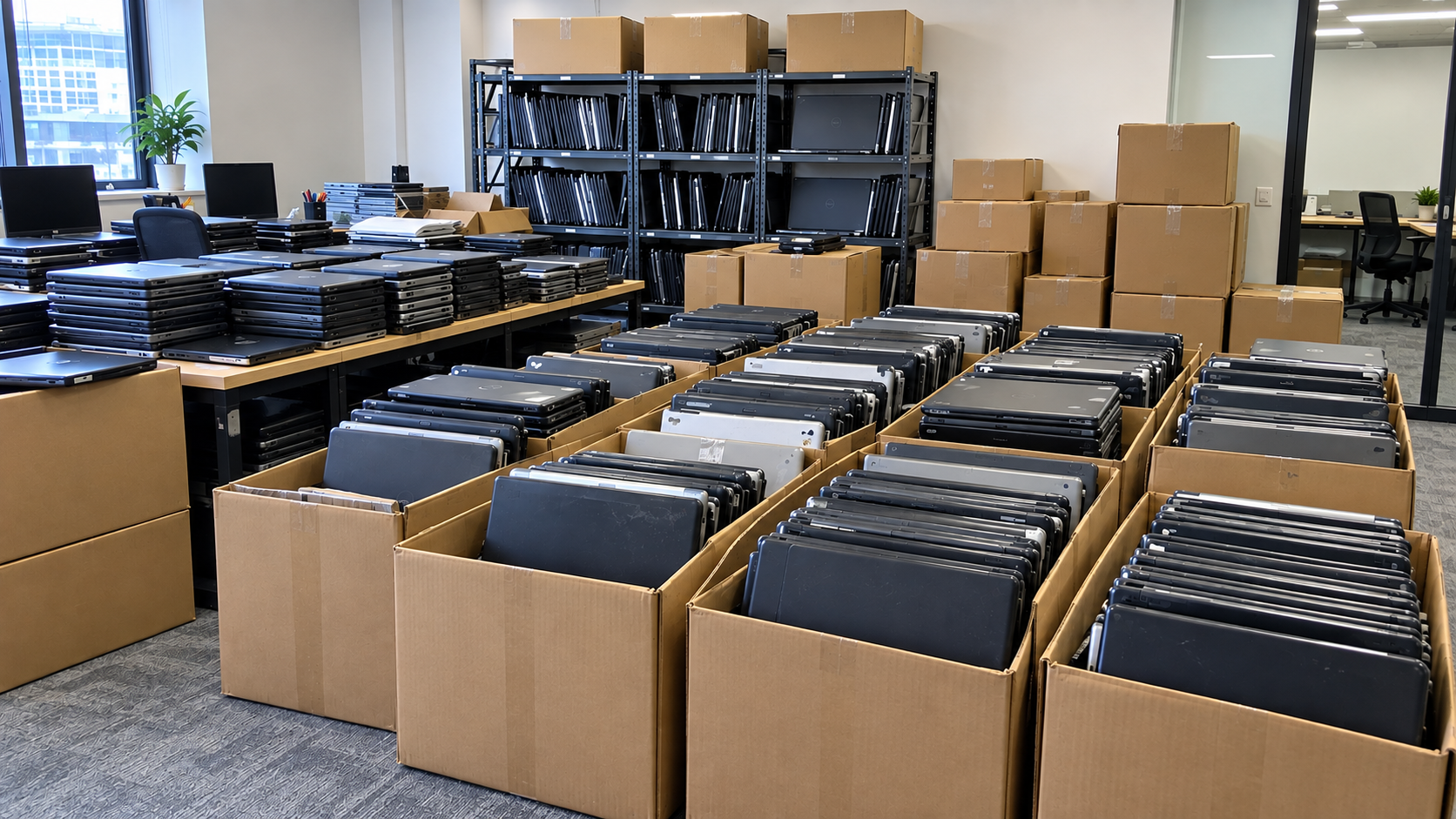
Municipal residential drop-off programs are not designed for a company retiring 40 computers, a school replacing hundreds of laptops, or an office closing with servers, monitors, printers, switches, and hard drives.
For these projects, a commercial electronics recycling or ITAD provider is generally the more practical route.
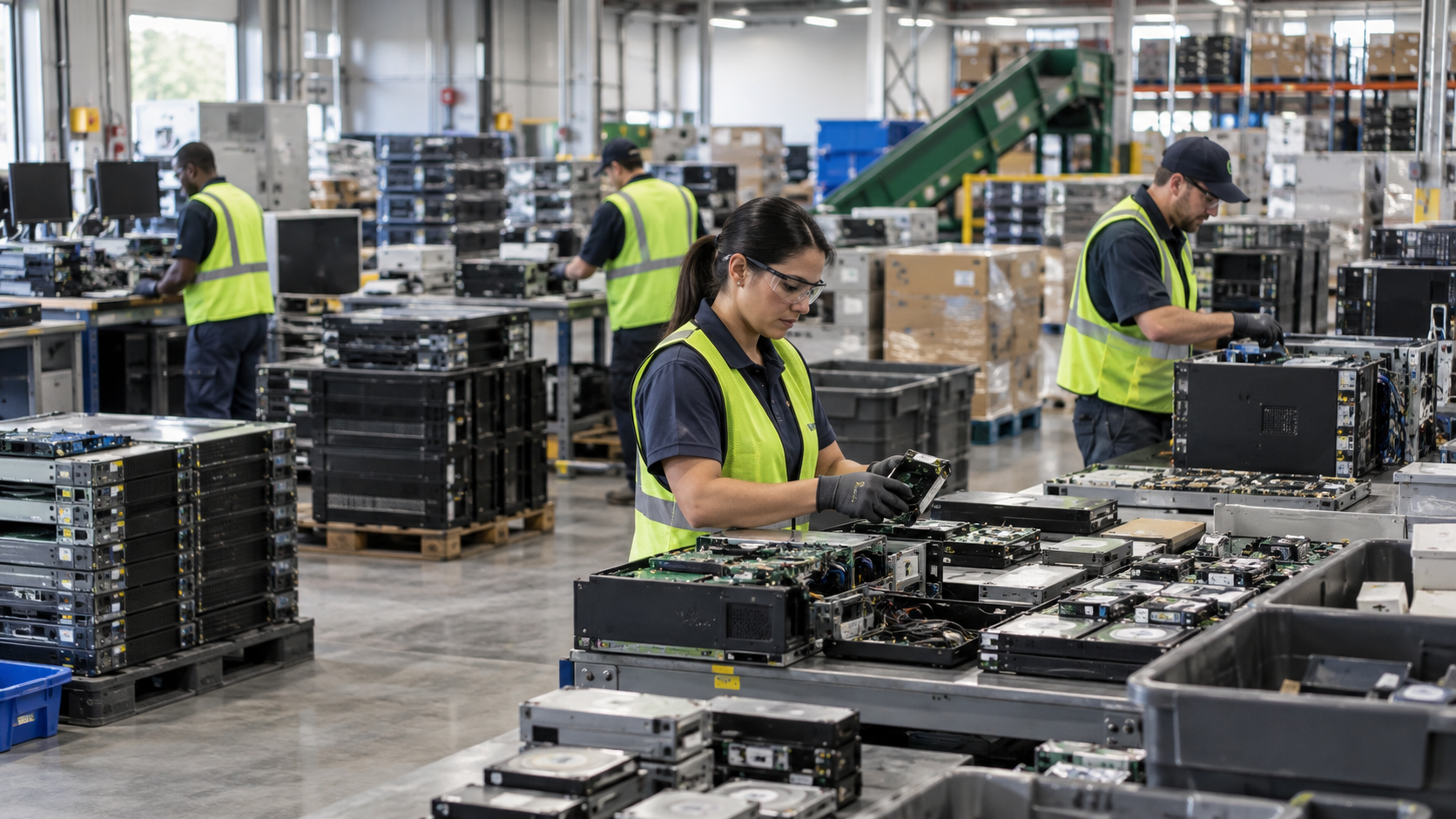
IT asset disposition is a structured process for retiring technology while addressing logistics, reuse or recycling, data security, asset tracking, and documentation.
Before selecting a provider, ask:
What types and quantities of equipment can you accept?
Can you provide pickup from our Houston location?
How are hard drives, SSDs, servers, phones, and other data-bearing devices handled?
Is chain-of-custody documentation available?
Can you provide serialized asset reports or certificates of data destruction?
Which facility will process the equipment, and does it hold R2 or e-Stewards certification?
What happens to equipment that can be reused rather than recycled?
The EPA recommends that businesses, governments, and large purchasers consider certified electronics recyclers. In the United States, EPA identifies R2 and e-Stewards as the two accredited certification standards for electronics recyclers.
Protect Your Data Before Recycling
A computer may be obsolete, but the information stored on it may still be valuable.
TCEQ states that consumers are responsible for confidential information left on equipment they submit for recycling or reuse. Back up anything you need and erase personal information before surrendering a computer or storage device.
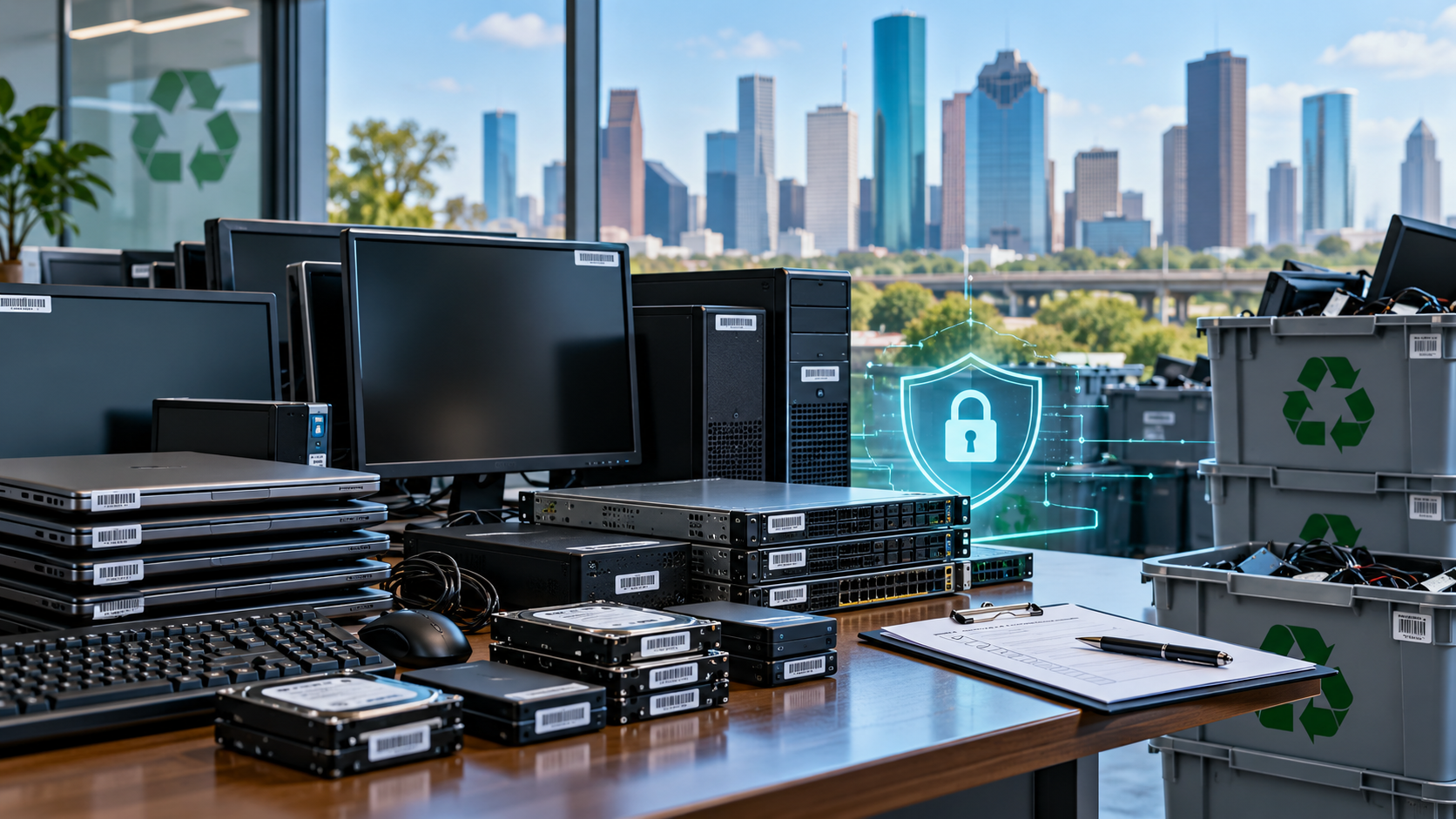
Businesses should identify every data-bearing asset before equipment leaves their control. That includes not only laptops and desktops but also servers, HDDs, SSDs, smartphones, tablets, storage arrays, and some multifunction printers.
For sensitive commercial projects, agree on the required data-sanitization or destruction process and documentation before scheduling pickup.
Should Working Electronics Be Recycled?
Not automatically.
TCEQ encourages Texans to consider repairing, reselling, donating, or recycling used electronics. If a device remains functional and has useful life remaining, reuse or refurbishment may make more sense than immediately processing it as scrap.
For businesses, usable equipment may also have recoverable value. A qualified ITAD provider can help determine what may be suitable for reuse or resale and what should proceed directly to recycling.
Frequently Asked Questions
Can I put electronics in my Houston curbside recycling bin?
No. Electronics should be taken to an appropriate electronics recycling location rather than placed in Houston’s normal curbside recycling stream. The City’s dedicated recycling facilities provide options for residential electronics.
Is electronics recycling free in Houston?
Some residential options are available without a separate recycling charge, including qualifying manufacturer programs under Texas law. Commercial electronics recycling may involve pickup, transportation, data destruction, reporting, or other service costs depending on the project.
Where can I recycle a large number of computers in Houston?
Businesses and organizations with bulk equipment should consider a commercial electronics recycler or ITAD provider rather than a residential municipal program.
Find the Right Electronics Recycling Option in Houston
For a few household devices, start with a City of Houston recycling center, Environmental Service Center, or the appropriate Texas manufacturer take-back program.
For a business technology refresh, office closure, server retirement, or larger electronics cleanout, evaluate a commercial solution that can address pickup logistics, data security, chain of custody, and documentation.
LoneStar e-Waste helps Houston residents and businesses connect with appropriate electronics recycling solutions and local providers. If you have computers, servers, monitors, office electronics, or a bulk IT equipment project, you can request a recycling quote based on your equipment, quantity, location, and service requirements.