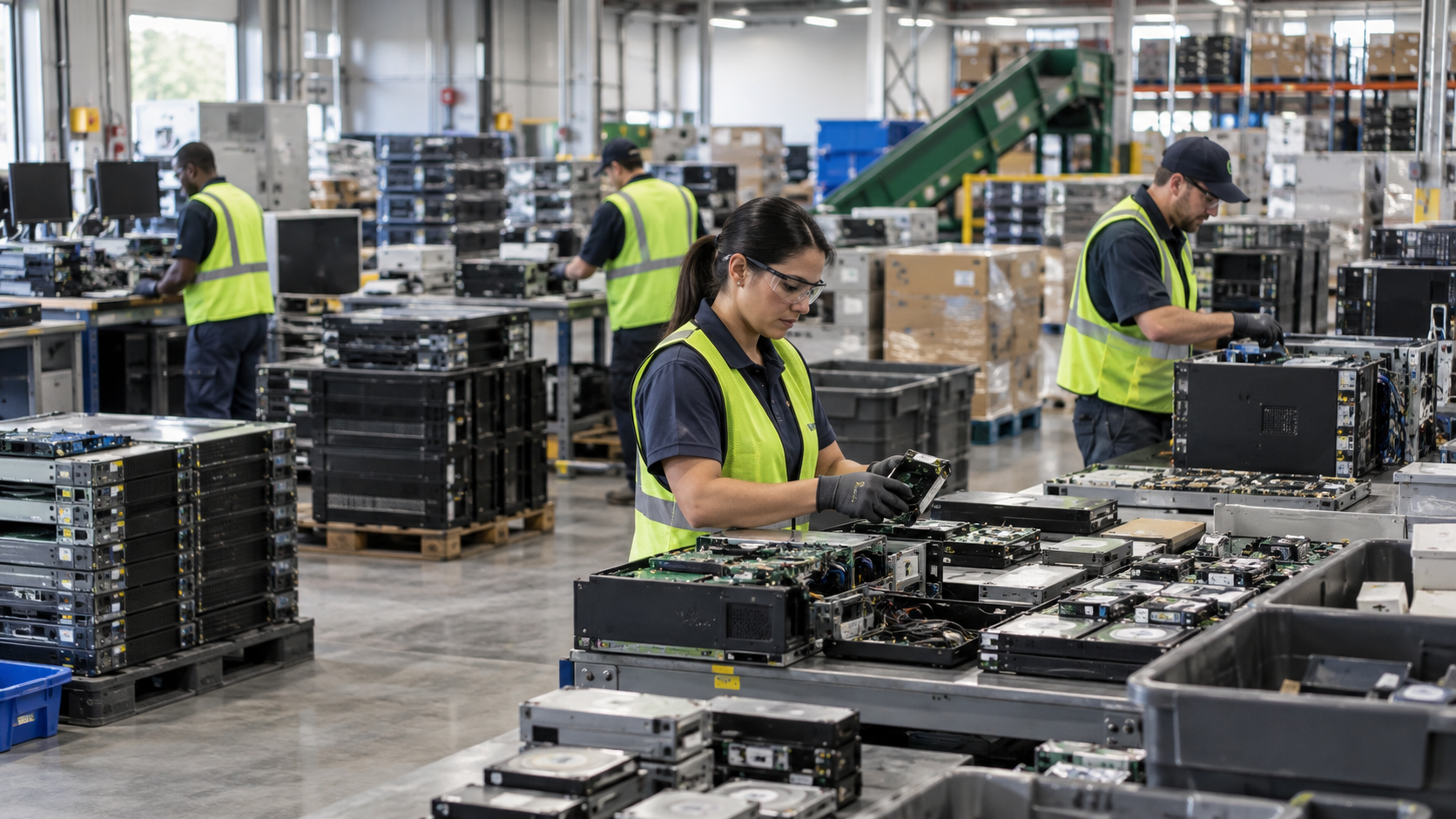

R2v3 and e-Stewards are the two accredited electronics-recycler certification standards identified by the U.S. Environmental Protection Agency. Both use independent third-party audits and address environmental practices, worker protection, data security, reuse, and downstream recycling. The biggest difference is how they structure those controls: R2v3 is a modular, process-based standard administered by Sustainable Electronics Recycling International (SERI), while e-Stewards Version 4.1, administered by the Basel Action Network (BAN), adds more prescriptive requirements in areas such as international e-waste movement, data-destruction certification, and performance verification.
For a business choosing an IT asset disposition or electronics recycling provider, neither certification should be treated as a simple “good versus bad” label. The better question is which requirements matter for your assets, data, procurement policy, and downstream-risk tolerance.
What Is R2v3?
R2v3 is the current generation of the Responsible Recycling standard. It applies core requirements to certified facilities and uses process-specific appendices for activities such as downstream recycling, data sanitization, test and repair, specialty electronics reuse, materials recovery, brokering, and photovoltaic modules.
That structure matters because an R2 certificate has a defined scope. A facility must be certified for the R2 processes it actually performs. Facilities using downstream vendors for R2 Controlled Streams may need Appendix A, while logical data sanitization activities fall under Appendix B.
R2 also requires an environmental, health and safety management system. SERI states that facilities can use certifications such as ISO 14001 plus ISO 45001, or RIOS, depending on the operation.
What Is e-Stewards?
The current e-Stewards Standard is Version 4.1. It covers responsible reuse, recycling, and disposition of electronic equipment and IT assets, with particular emphasis on environmental protection, data security, downstream accountability, and legal transboundary movement.
One clear differentiator is data security. Current e-Stewards certification requires NAID AAA Certification from i-SIGMA, including endorsements applicable to the processor’s business model. The processor therefore must satisfy a separate audited data-security certification in addition to e-Stewards.
e-Stewards also requires a certified environmental management system based on ISO 14001 or RIOS.
R2v3 vs. e-Stewards: Key Differences
| Area | R2v3 | e-Stewards |
|---|---|---|
| Administrator | SERI | Basel Action Network |
| Current standard | R2v3 | Version 4.1 |
| Structure | Core requirements plus applicable process appendices | Comprehensive standard with required supporting certifications |
| Data security | Core data-security requirements; Appendix B covers logical sanitization and enhanced physical sanitization | NAID AAA Certification is a prerequisite |
| Downstream management | Qualification and tracking of downstream vendors for controlled streams | Due diligence extends through downstream processors |
| International movement | Requires documented compliance with applicable export, transit, and import laws | Explicitly requires Basel Convention-aligned controls and restricts hazardous e-waste exports from developed to developing countries |
| Additional oversight | Accredited certification audits | Accredited audits plus performance verification, including unannounced inspections and GPS tracking |
The Export Rules Are a Major Distinction
R2v3 requires facilities to identify applicable import and export requirements and demonstrate the legality of international shipments, including requirements in exporting, transit, and importing countries. It also requires downstream verification for controlled streams.
e-Stewards goes further by incorporating Basel Convention principles into its certification requirements. Its program states that hazardous electronic waste cannot be exported from developed to developing countries, while legitimate, functional equipment may still be moved for reuse when applicable requirements are satisfied.
For organizations with strict environmental, ESG, or global supply-chain policies, that distinction may materially affect vendor selection.
What About Data Destruction?
Both standards address data-bearing electronics, but the assurance model differs.
Under R2v3, all certified facilities are subject to data-security requirements, and Appendix B applies when a facility performs logical sanitization or certain enhanced physical-sanitization activities.
e-Stewards requires NAID AAA certification in addition to its own standard. i-SIGMA says NAID AAA certification involves initial and ongoing audits, including unannounced audits.
For customers, certification should not replace project-level documentation. Ask how HDDs, SSDs, servers, laptops, phones, and other data-bearing devices will be tracked and sanitized. If you need serialized reporting, certificates of data destruction, or a documented chain of custody, put those requirements into the scope of work.
Which Certification Should Your Business Require?
Start with your risk profile rather than the logo.
R2v3 can be a strong fit when you want a certified provider with defined processes for reuse, repair, data handling, downstream management, and materials recovery. e-Stewards may be preferable when your procurement policy prioritizes Basel-aligned export restrictions, mandatory NAID AAA certification, or its additional performance-verification program.
Some organizations choose vendors holding both certifications. Others accept either standard but add contractual requirements for data destruction, chain of custody, downstream reporting, insurance, asset tracking, or certificates.
Before approving a vendor, verify:
- The certification is current.
- The specific facility handling your equipment is covered.
- The certification scope matches the services you need.
- Data-destruction methods and documentation meet your requirements.
- Pickup, custody transfer, downstream handling, and final documentation are clearly defined.
Frequently Asked Questions
Is R2v3 the same as e-Stewards?
No. Both are independently audited electronics recycling standards, but they are administered by different organizations and differ in structure, data-security prerequisites, export requirements, and verification methods.
Does certification guarantee my company’s legal compliance?
No. Certification can strengthen vendor due diligence, but it does not replace your organization’s obligations under applicable privacy, environmental, contractual, or industry-specific requirements.
Choosing a Certified Electronics Recycling Partner
For businesses retiring computers, servers, storage systems, or other IT assets, certification should be one part of a broader vendor review. Confirm the facility, scope, data process, downstream controls, logistics, and documentation before equipment leaves your custody.
LoneStar e-Waste helps organizations connect with appropriate electronics recycling and ITAD solutions. If you are planning an equipment refresh, office cleanout, server retirement, or other bulk project, request a quote and describe any certification, data-destruction, chain-of-custody, or reporting requirements your organization needs.