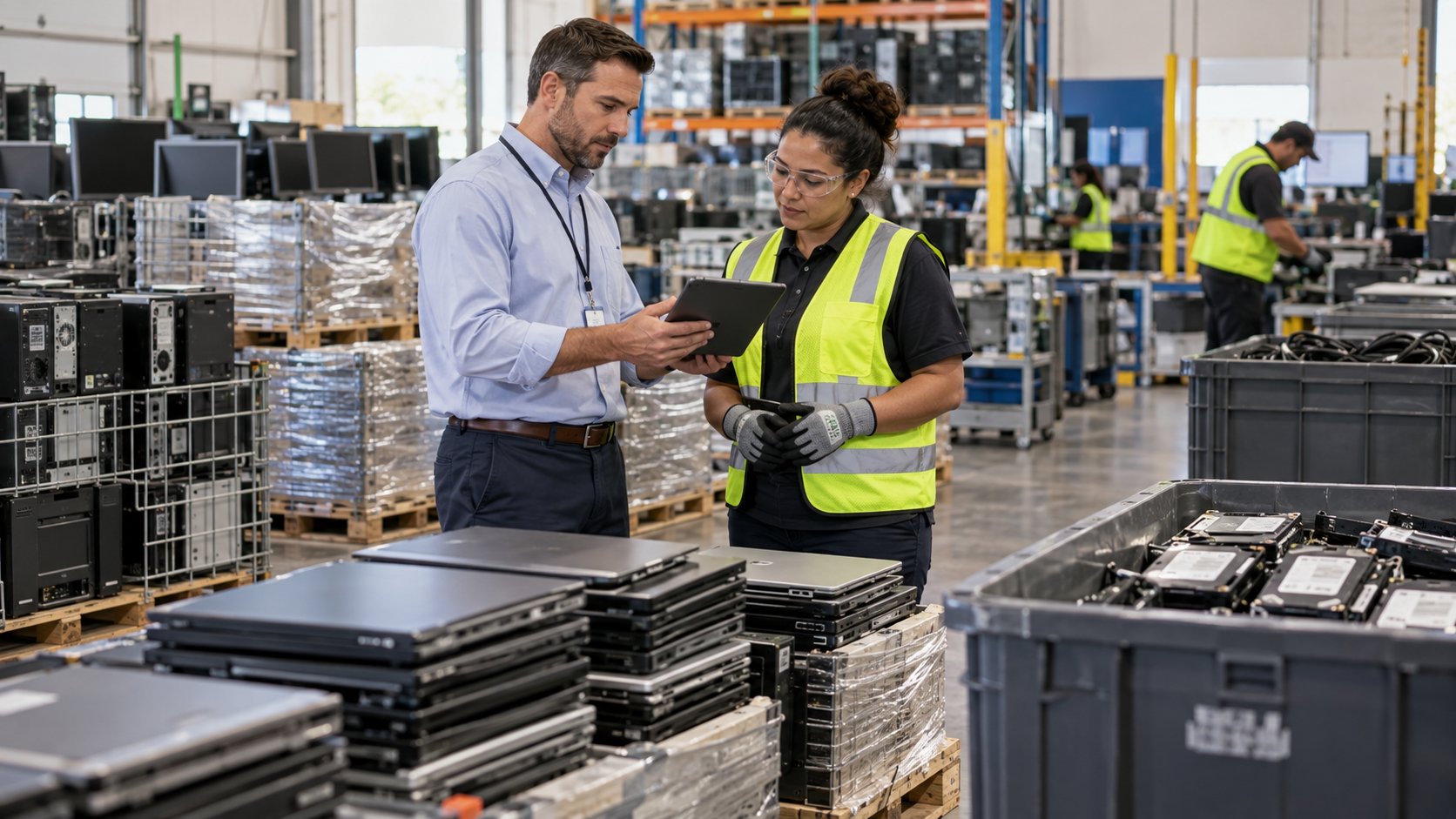
When a business hands computers, servers, hard drives, networking equipment, or other electronics to a recycling provider, it is also handing over responsibility for how those assets, materials, and potentially sensitive data are managed.
That is why R2v3 certification matters.
R2v3 is the current version of the R2 Standard for the electronics reuse and recycling industry. It is administered by Sustainable Electronics Recycling International (SERI) and is designed to address areas including data security, environmental practices, worker health and safety, reuse, recycling, and downstream management. R2-certified facilities are independently audited against the standard rather than simply declaring themselves compliant.
For customers, however, seeing “R2 Certified” should be the beginning of the vendor-selection process—not the end.
What Does R2v3 Certification Mean?
R2v3 establishes requirements for organizations involved in managing used electronics.
The U.S. Environmental Protection Agency recognizes R2 and e-Stewards as the two accredited certification standards for electronics recyclers in the United States. EPA recommends certified electronics recyclers for businesses, governments, and other large purchasers managing unwanted electronics.
Certification involves an independent auditing process. According to SERI, authorized Certification Bodies determine whether facilities conform to the R2 Standard. SERI maintains the standard and certification program but does not make individual facility certification decisions.
This distinction is important: R2 certification is not simply a membership, marketing badge, or self-assessment.
What Does R2v3 Cover?
R2v3 separates its requirements into Core Requirements, which apply to all certified facilities, and specialized Process Requirements that apply when a facility performs particular operations.
The specialized requirements are organized through appendices covering activities such as:
- downstream recycling chains;
- logical and physical data sanitization;
- testing and repair;
- specialty electronics reuse;
- materials recovery;
- brokering; and
- photovoltaic modules.
This structure allows certification to reflect what a particular facility actually does. A company focused on refurbishment may have a different certification scope from a facility specializing in physical data destruction or materials recovery.
That means customers should look beyond the R2 logo and examine the scope of certification.
Why the Certification Scope Matters
Not every R2-certified facility is certified for every electronics-processing activity.
SERI states that specialized Process Requirements apply only to facilities performing the corresponding processes. If a Process Requirement applies to a facility’s operations, it must be included within that facility’s certification scope.
This becomes especially important when your project contains sensitive data.
For example, SERI’s R2 directory allows customers to search for facilities based on capabilities and Process Requirements including logical data erasure, physical destruction, test and repair, materials recovery, and downstream recycling-chain management.
If your company is retiring hundreds of hard drives, asking only, “Are you R2 certified?” does not tell you everything you need to know.
Ask whether the facility’s current certification scope covers the services your project requires.
What Does R2v3 Say About Data Security?
Data security is one of the most important reasons organizations scrutinize electronics recycling providers.
R2v3 includes Core Requirement 7 for data security, while Appendix B applies additional requirements for facilities performing enhanced logical and/or physical data sanitization and tracking.
R2 also addresses what happens when data-bearing equipment is transferred downstream. Depending on the circumstances, downstream providers performing sanitization must meet specific qualification requirements. SERI’s guidance emphasizes controlling and tracking data-containing devices and verifying downstream capabilities.
For businesses disposing of servers, HDDs, SSDs, laptops, smartphones, or other storage devices, this makes data handling a question worth discussing before equipment leaves your control.
Ask the provider:
- What sanitization or destruction method will be used?
- Where will data-bearing devices be processed?
- Is that process covered by the facility’s certification scope?
- How are devices tracked through the process?
- What documentation will we receive afterward?
For higher-risk projects, these answers may be just as important as the recycling quote.
R2 Certification and Downstream Vendors
Electronics rarely move through only one organization.
Equipment may be collected, sorted, refurbished, dismantled, processed for material recovery, or transferred to specialized downstream companies.
R2v3 addresses this through its downstream recycling-chain requirements. Importantly, R2 does not require every downstream vendor to be R2 certified. SERI explains that non-R2 downstream vendors can be used when they meet the applicable qualification requirements of the standard.
Customers should therefore avoid assuming that an R2-certified company personally performs every step.
Instead, ask what happens to your equipment after collection and which activities are performed internally versus downstream.
How to Verify an R2-Certified Facility
Do not rely solely on a logo displayed on a website, proposal, truck, or sales brochure.
SERI maintains an official directory of R2-certified facilities and collects certificates from authorized Certification Bodies. The directory can be searched by facility name, geography, certificate status, workflow, and certification scope.
Before selecting a provider:
- Search for the facility in SERI’s official directory.
- Confirm that its certification status is active.
- Review the specific facility location listed.
- Examine its certification scope.
- Confirm that the scope matches the services you need.
Certification is facility- and scope-specific, so verification is particularly useful when working with organizations operating multiple locations or offering several different services.
Is R2v3 Certification Required by Law?
R2v3 is a certification standard, not itself a federal law.
However, organizations may choose or require certified recyclers through procurement policies, contracts, internal risk-management programs, or sustainability requirements. EPA encourages electronics recyclers to become certified and recommends certified recyclers for businesses, governments, and large purchasers managing unwanted electronics.
Certification also does not eliminate a customer’s need to evaluate applicable legal, contractual, privacy, or industry-specific obligations.
What Should You Ask an Electronics Recycling Provider?
R2 certification is a useful vendor-selection signal, but customers should evaluate the complete service.
Before approving a commercial electronics recycling or IT asset disposition project, ask about:
- current certification status and scope;
- handling of HDDs, SSDs, and other data-bearing devices;
- chain-of-custody procedures;
- logical sanitization versus physical destruction options;
- downstream vendor management;
- equipment tracking and inventory reporting;
- pickup and transportation procedures;
- recycling and reuse pathways; and
- documentation provided when the project is completed.
These questions help turn “Are you certified?” into a more meaningful evaluation of how your specific equipment will actually be handled.
Is every R2-certified recycler certified for data destruction?
Not necessarily for every specialized data-destruction process. All R2-certified facilities are subject to core data-security requirements, but specialized logical and physical sanitization capabilities can fall under Appendix B and the facility’s specific certification scope.
How can I check whether an R2 certificate is legitimate?
Use SERI’s official R2 Certified Facilities directory. It provides certification status and allows searches by facility, location, workflow, and scope.
Is R2 the only electronics recycling certification?
No. EPA identifies both R2 and e-Stewards as accredited certification standards for electronics recyclers in the United States.
Choosing the Right Recycling Solution
R2v3 certification gives businesses a structured way to evaluate important practices surrounding electronics reuse, recycling, data security, worker safety, and downstream management. But the details matter: verify the facility, review its certification scope, and ask how your specific assets will be processed.
For Houston organizations retiring computers, servers, storage devices, networking equipment, or other commercial electronics, LoneStar e-Waste can help connect you with an appropriate local electronics recycling solution based on your project requirements.