
For a business, electronics recycling can cost nothing, require a service fee, or even generate value back to the company. The final price depends less on the number of devices alone and more on what equipment you have, its age and condition, transportation requirements, data-security needs, documentation, and whether any assets can be refurbished or resold.
That is why most commercial electronics recyclers and IT asset disposition (ITAD) providers quote projects individually rather than publishing one universal rate.
For Houston businesses planning a computer refresh, office cleanout, server retirement, or larger IT decommissioning project, understanding these cost factors makes it easier to compare quotes and avoid unexpected charges.
What Does Business Electronics Recycling Typically Cost?
Published 2026 pricing provides a useful illustration of how widely costs can vary. One national ITAD pricing resource lists basic recycling estimates of roughly $5–$15 per laptop, $8–$20 per desktop, and $15–$50 per server, with additional charges possible for transportation or data destruction. These are general market estimates, not fixed Houston prices.
Houston-area providers demonstrate the same variation. One provider publishes mail-in pricing of $9 per hard drive, $10 per device and $0.45 per pound for mixed electronics, while quoting onsite projects according to volume and project requirements. Other local providers advertise free recycling or pickup for qualifying loads.
The more useful question, therefore, is not simply “What does electronics recycling cost?” but what will make your particular project cost money, break even, or produce an asset-recovery return?
The Main Factors That Determine Electronics Recycling Cost
1. Type and Quantity of Equipment
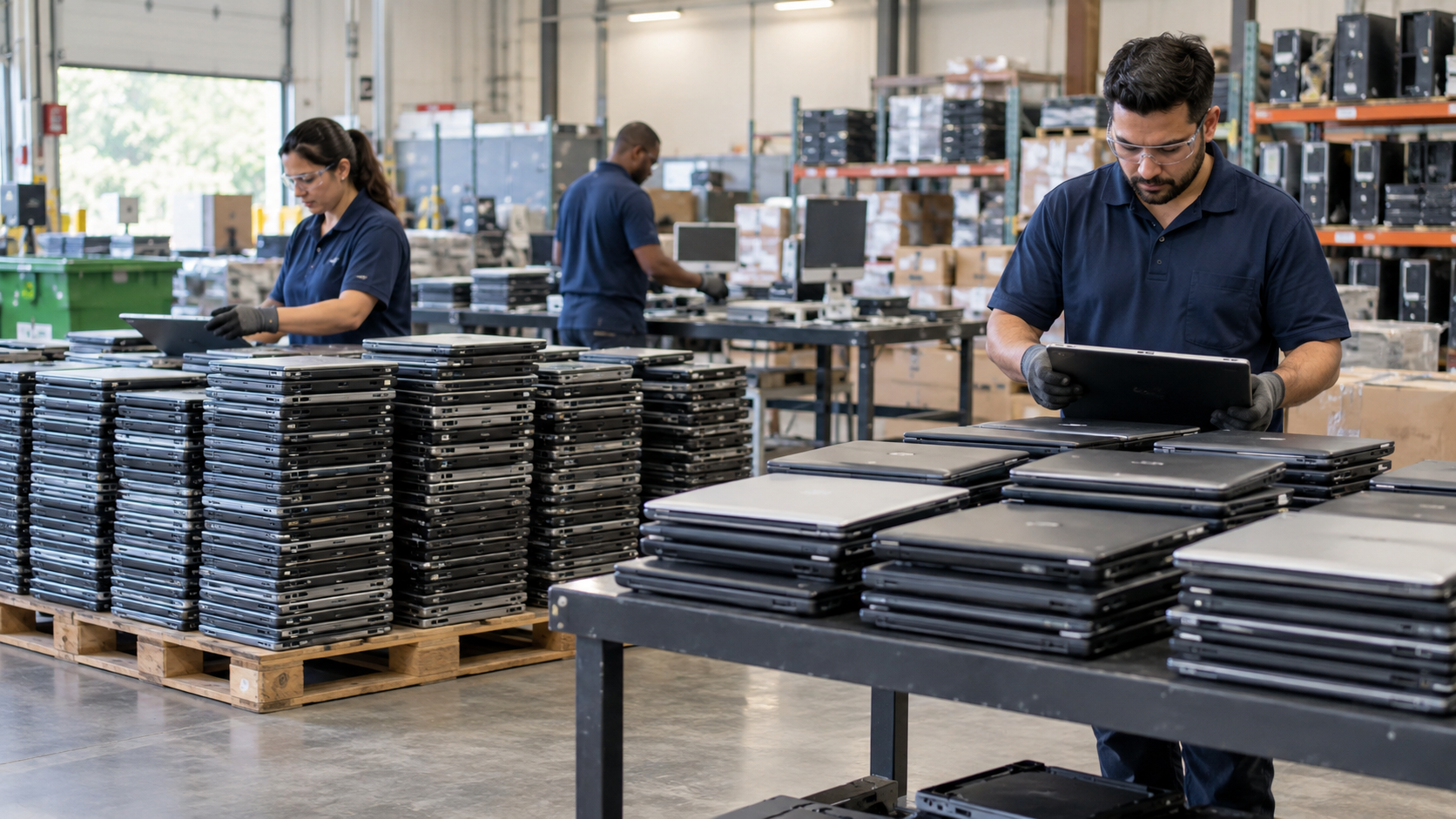
A pallet containing recent laptops, servers and enterprise networking hardware is financially different from a load dominated by outdated displays, damaged printers or miscellaneous peripherals.
Large projects may also have lower logistics costs per device because the recycler can collect more equipment in a single trip. Some providers waive pickup charges once a project reaches a particular volume.
Before requesting a quote, prepare an approximate inventory covering:
- laptops and desktop computers;
- servers and storage equipment;
- monitors and televisions;
- printers and copiers;
- networking equipment;
- hard drives and SSDs;
- mobile devices; and
- batteries, UPS units and miscellaneous electronics.
Exact counts are ideal, but reasonable estimates or photographs can help a provider develop an initial quote.
2. Pickup and Transportation
Transportation can become a significant part of the project when equipment must be collected from multiple offices, carried down stairs, removed from racks, palletized, loaded after hours or transported over a long distance.
A straightforward dock pickup of several pallets generally requires fewer resources than removing equipment from individual offices across multiple floors.
Ask whether the quote includes labor, loading, pallets, transportation, inside pickup and any fuel or distance charges.
3. Secure Data Destruction
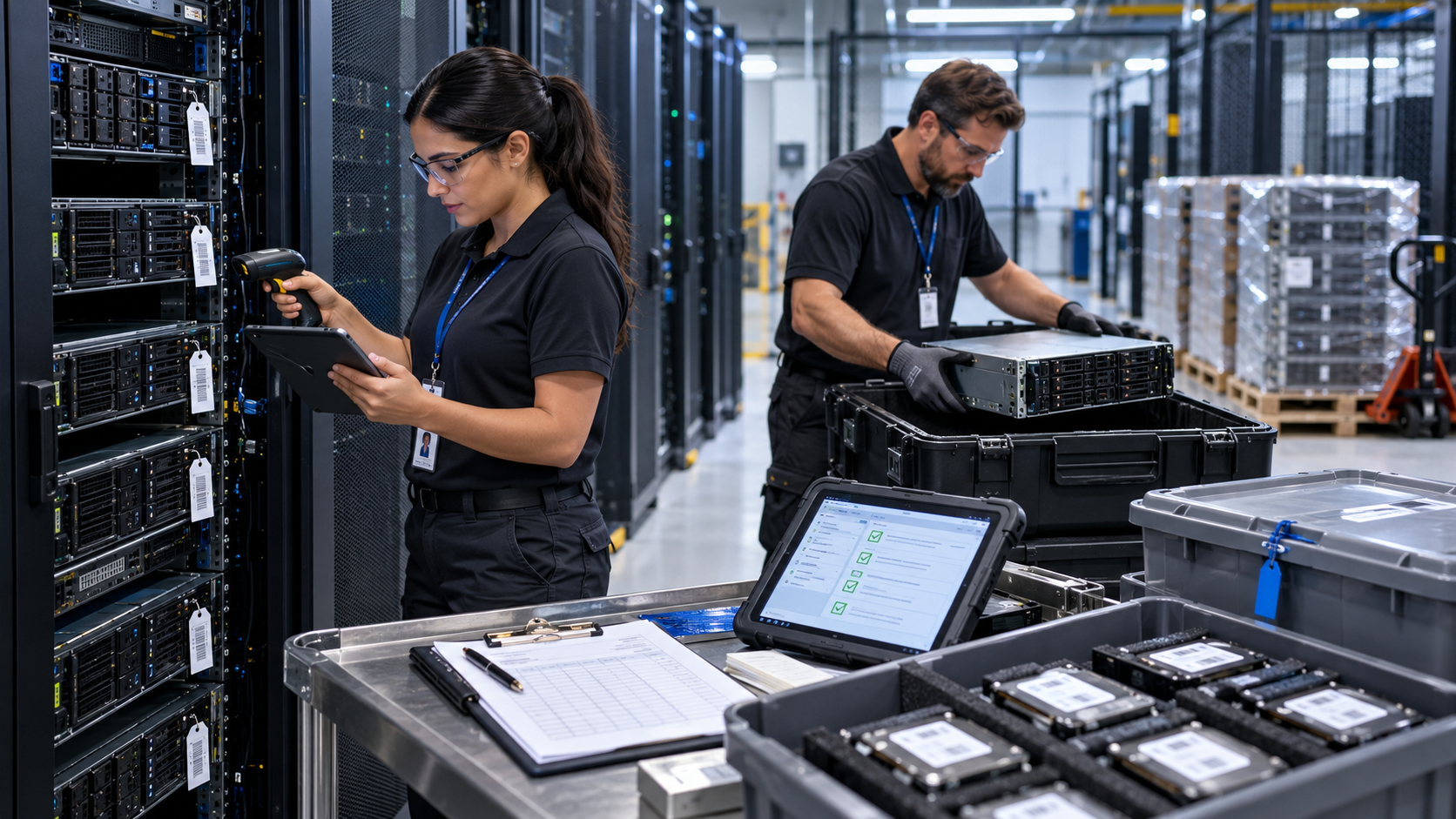
Computers are not simply scrap. Retired laptops, desktops, servers, storage arrays and mobile devices may still contain confidential business or customer information.
Data sanitization therefore needs to be included in the project’s budget and security plan.
The current NIST Special Publication 800-88 Revision 2, published in September 2025, provides guidance for establishing an organizational media-sanitization program and selecting appropriate sanitization controls according to information sensitivity.
Costs can vary depending on whether your organization requires verified software sanitization, cryptographic erase, physical destruction, witnessed destruction or onsite shredding.
Do not compare recycling quotes without determining exactly what happens to every data-bearing device.
4. Asset Recovery Can Offset the Cost
Not every retired computer should automatically be dismantled for materials.
Recent laptops, servers, storage equipment, networking hardware and other functioning assets may retain resale value. A structured ITAD program can test eligible equipment, securely sanitize it and remarket usable assets.
Some ITAD companies deduct recycling, logistics and processing expenses from recovered asset value. In favorable cases, this can reduce the net project cost substantially or result in money being returned to the business.
For this reason, businesses should ask vendors to separate recycling costs from potential resale credits instead of assuming everything should be processed as scrap.
Does Texas Provide Free Electronics Recycling for Businesses?
Businesses should not assume that Texas’ consumer electronics programs provide free commercial recycling.
The Texas Recycles Computers Program requires participating manufacturers to provide qualifying consumers with free recycling for certain computer equipment. However, the Texas Commission on Environmental Quality specifically notes that commercial, government and nonprofit organizations should investigate other manufacturer, retailer, donation and recycling options.
TCEQ also explains that electronic equipment can involve different waste-management requirements depending on the material and how it is handled. Certain components may potentially be regulated as hazardous or universal waste under applicable circumstances.
For Houston companies, commercial electronics recycling should therefore be evaluated as a business IT-disposition project rather than treated like a residential drop-off program.
What Documentation Should Be Included?
Price should not be the only factor when selecting a recycling provider.
Depending on the project, ask about:
- chain-of-custody documentation;
- serialized asset reporting;
- certificates of recycling;
- certificates of data destruction;
- data-sanitization verification;
- downstream recycling practices; and
- the facility’s relevant certifications.
The U.S. Environmental Protection Agency identifies R2 and e-Stewards as the two accredited certification standards for electronics recyclers and recommends certified electronics recyclers for businesses, governments and large purchasers.
A low quote becomes far less attractive if your organization cannot verify where equipment went or what happened to sensitive data.
How to Get a More Accurate Electronics Recycling Quote
Provide the recycler with as much project information as possible: equipment types, approximate quantities, pickup ZIP code, building access, preferred timeline, number of data-bearing devices and any special destruction or reporting requirements.
Also ask the provider to show clearly which services are included and which are optional.
LoneStar e-Waste helps Houston-area businesses connect with appropriate electronics recycling and IT asset disposition solutions for computers, servers and other retired business electronics.
If your company is planning an equipment refresh, office cleanout or larger IT retirement project, requesting a quote based on an asset inventory is the most reliable way to determine your actual recycling cost.
FAQ
Can business electronics recycling be free?
Yes. Certain equipment loads may qualify for free recycling or pickup, particularly when volume or recoverable asset value offsets processing and transportation costs. Eligibility varies by provider and project.
Can old IT equipment be worth money?
Yes. Functional laptops, servers, networking hardware and other relatively recent equipment may retain resale value. Ask whether the provider offers asset recovery or revenue sharing.
Is data destruction included in electronics recycling?
Not necessarily. Some providers include sanitization, while others price wiping, shredding, onsite destruction or detailed certification separately. Confirm the method and documentation before accepting a quote.